
Situation
Royal Coffee was framed as a new entrant that needed to differentiate its online coffee buying experience through freshness, quality, consistency, and personalisation.
Case study / 05 · Design-task concept
A research-led concept for Royal Coffee, designed to make an online coffee purchase feel more tangible through mood-led discovery, blend customisation, and a guided purchase flow.
A 41-participant survey and design-task synthesis shaped a mood-led coffee-selection concept.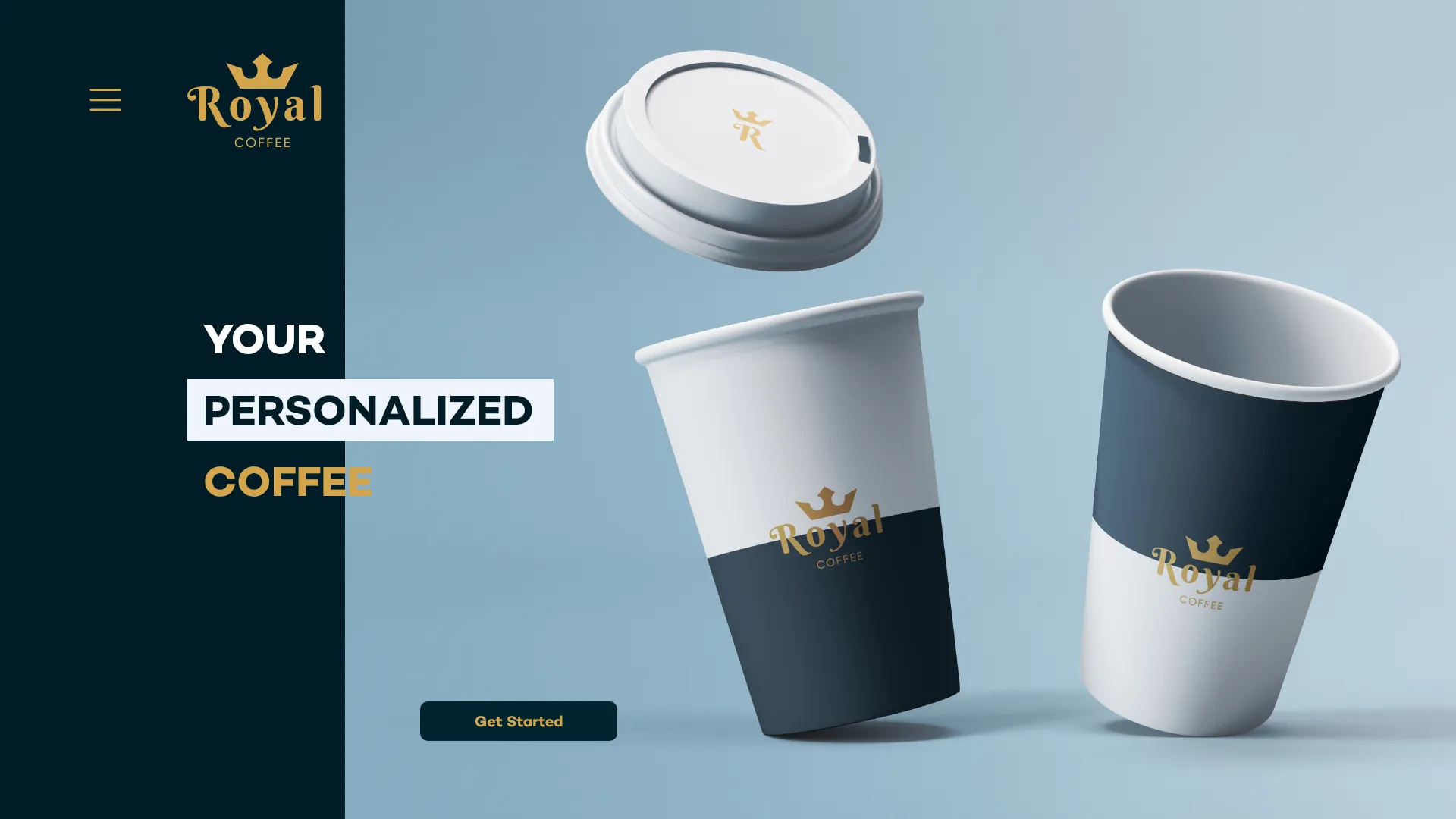
At a glance
Evidence to decision
A new coffee brand needed to make an online purchase feel more understandable and personal despite the lack of aroma, taste, and physical inspection.
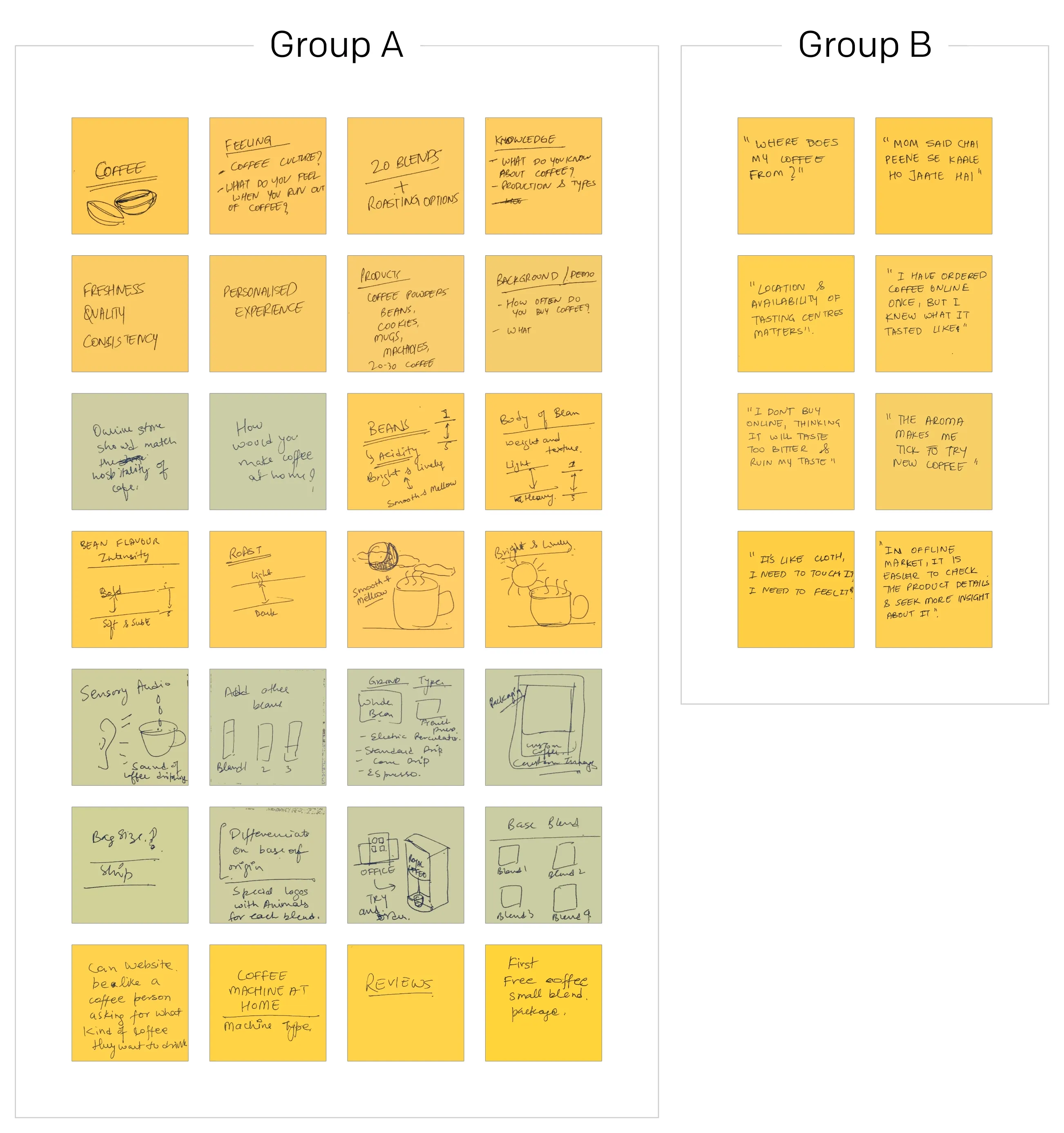
A 13-question survey with 41 participants, an interview guide, benchmarking, personas, a journey map, and recorded quotes highlighted uncertainty about coffee attributes and buying without sensory cues; the research is not presented as representative.
The experience needed an approachable entry into a large blend range, clearer product information, and enough control to build confidence in a sensory purchase.
Use mood as the first selection step, recommend a base blend, and then let customers adjust blends, grind, weight, and packaging before checkout.
A documented concept spanning research synthesis, task flows, storyboards, sitemap, wireframes, and high-fidelity mood and blend-selection screens.
The work produced a coherent UX design-task concept; build, usability validation, launch, and behavioural or commercial impact are not evidenced.
Royal Coffee was framed as a new entrant that needed to differentiate its online coffee buying experience through freshness, quality, consistency, and personalisation.
Design a brand-launching website that helps customers choose and customise coffee, while accommodating multiple coffee blends and roasting options.
Synthesised survey, interview, journey-mapping, brainstorming, task-flow, storyboard, sitemap, wireframe, and high-fidelity concept materials into a guided coffee-selection experience.
Produced a documented concept with a mood-led entry point, blend selection, ground and weight choices, bag customisation, cart, checkout, and confirmation stages. No launch or behavioural outcome is evidenced in the supplied materials.
Royal Coffee is a 2020 UX design-task concept, not a documented commercial launch. The supplied presentation frames the brief around a new coffee brand entering metropolitan markets and differentiating itself through a more personal online buying experience.
The design turns a coffee purchase into a guided sequence: choose a mood, receive a base blend, optionally add other blends, select ground type and weight, customise the bag, and complete the order. The case study preserves the evidence available in the presentation and working photographs; it does not infer product performance, launch status, or business impact.
The task materials identify a central tension: people wanted more confidence in an online coffee purchase, but coffee is usually assessed through sensory cues such as aroma, taste, and physical inspection. The concept therefore needed to help a customer make a choice without treating a large set of blends as an undifferentiated catalogue.
The proposed product also had to support coffee and related products, multiple blends and roasting options, direct consumers as well as larger audiences, and a memorable brand-launching experience. These are brief and concept requirements, not validated product requirements.
The supplied presentation is attributed to Shubham Gupta. It documents the following design activities:
The materials do not document team composition, stakeholder involvement, implementation ownership, or a project timeline, so those details are intentionally not claimed here.
The brief identifies corporate people, people working from home, people on dates or hanging out, and people travelling as target audiences across metropolitan and tier 1 / tier 2 cities. The research synthesis shown in the presentation focuses most closely on two customer archetypes:
The concept assumes an online purchase journey, often starting from social media or web search, and supplements it with the possibility of a physical tasting-centre touchpoint.
The supplied materials show a design-task process and concept artefacts. They do not provide evidence for a production release, conversion, retention, revenue, accessibility audit, usability-test results, or a live prototype.
The source record also does not establish participant recruitment, consent, raw responses, interview count, demographic breakdown, or whether the 41-person survey was representative. The figures and quotes are therefore presented as inputs to the concept, not as generalisable research findings.
The presentation records a mixed discovery approach: a 13-question survey with 41 participants, a user-interview guide, benchmarking, personas, a journey map, brainstorming, and synthesis into design directions. The qualitative material highlighted uncertainty about coffee origin, taste, aroma, and whether an online choice would be enjoyable without touching or tasting the product.
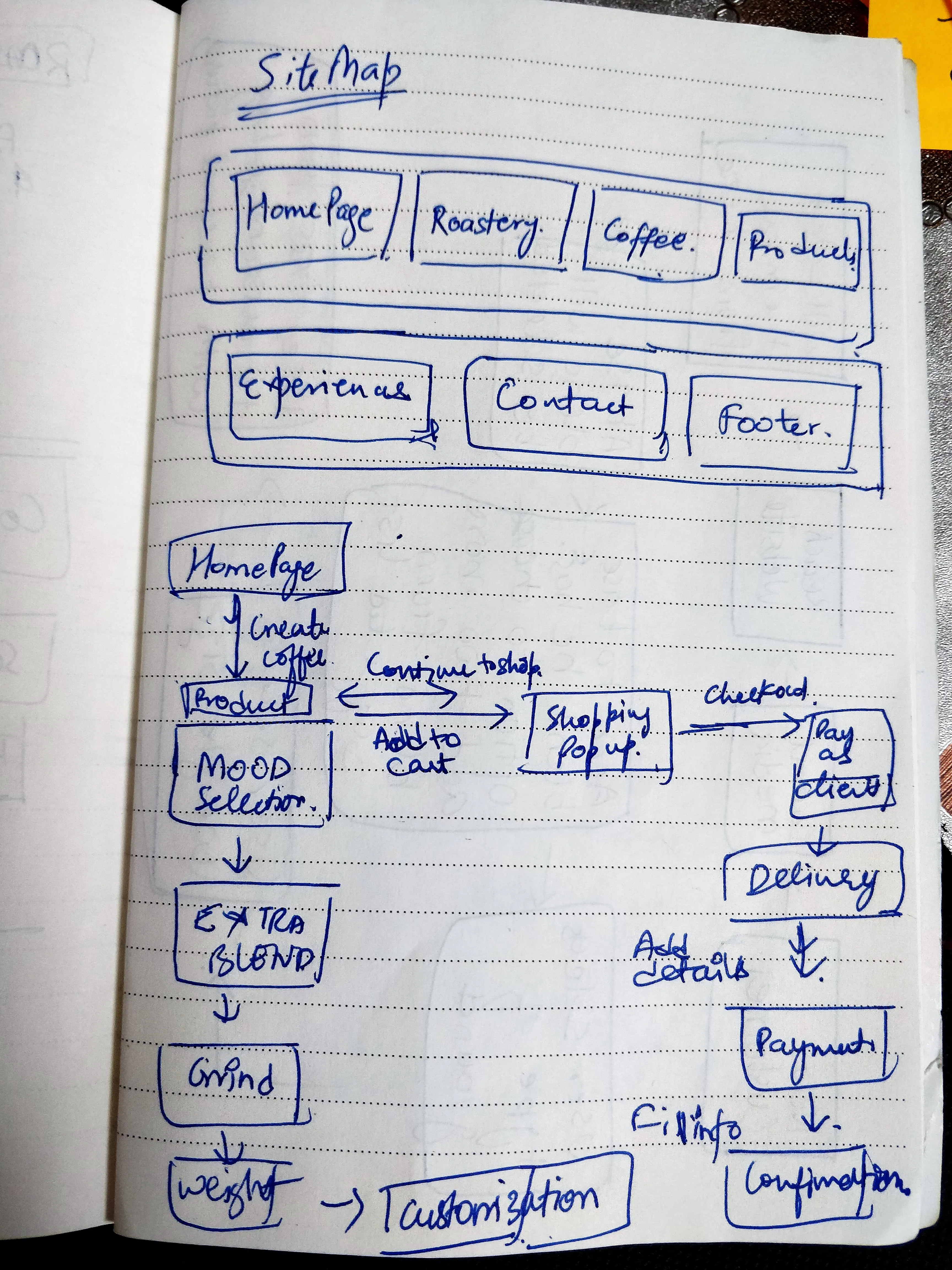
The sitemap separates the experience into Home Page, Coffee, Coffee Products, Experience, My Account, and Footer. Under the coffee path, the documented flow proceeds from Coffee Product to Mood Selection, Add Extra Blend, Choose Grind Type, Choose Weight, and Customise / Add Picture. Shopping then continues through cart, checkout, delivery, payment, and confirmation.
The storyboard also captures the experience from discovery to purchase: seeing a social-media ad, visiting the site, selecting a mood, choosing a base and extra blend, customising the product, choosing weight, adding it to the cart, and enjoying the coffee.
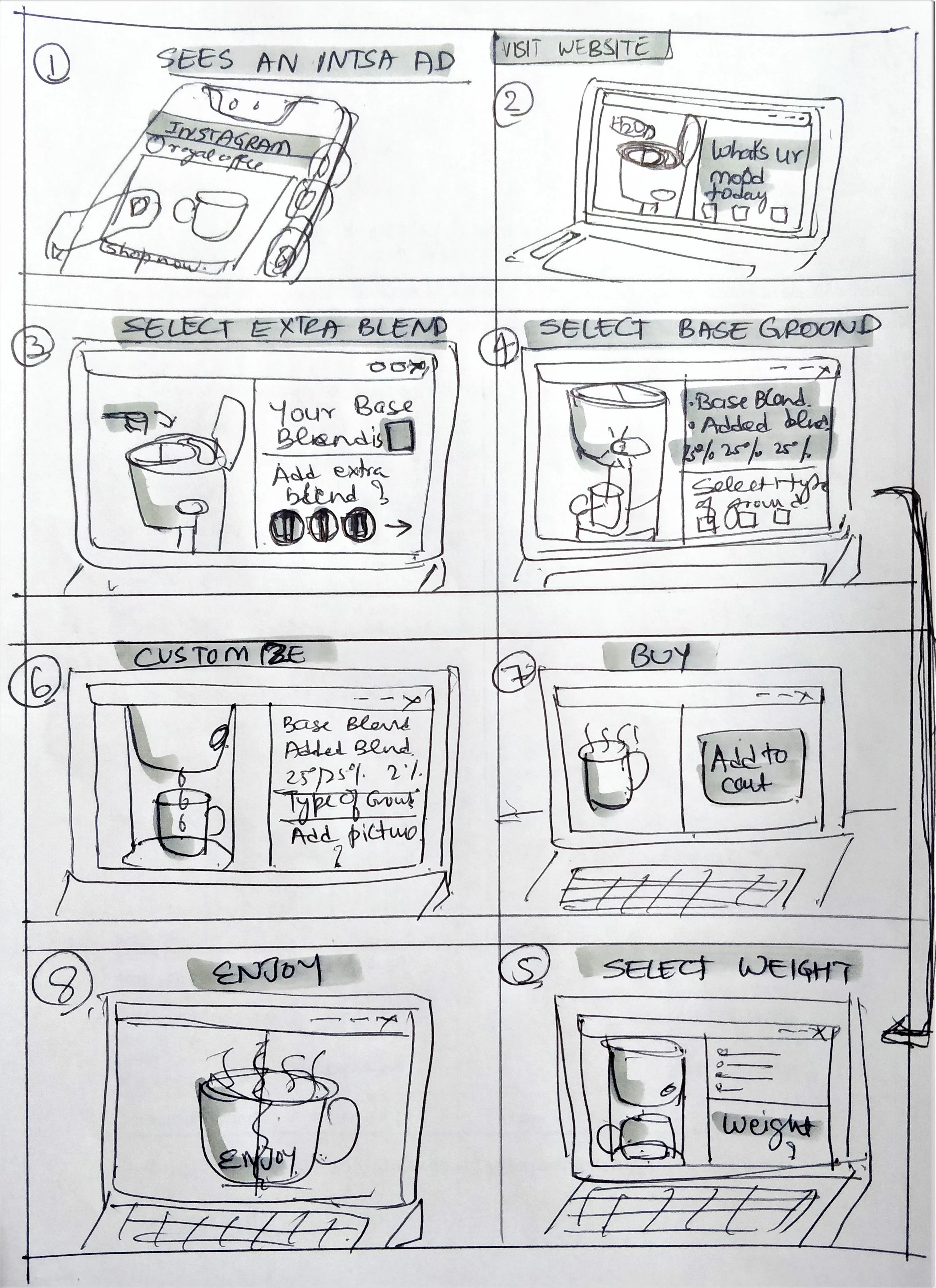
The materials document at least two concept iterations in the storyboard: an earlier flow focused on creating a new blend through physical coffee attributes, followed by a mood-led flow with optional added blends and personalised packaging. It also includes wireframes and high-fidelity screens.
No usability sessions, task-completion data, design review notes, or post-launch results were supplied. The final visuals should therefore be read as a concept exploration rather than a validated final product.
The final visual direction uses a dark navy and gold Royal Coffee brand frame with large product imagery. The entry screen invites the customer into a personalised coffee journey; subsequent screens show mood selection and a base-blend configuration with optional additions.
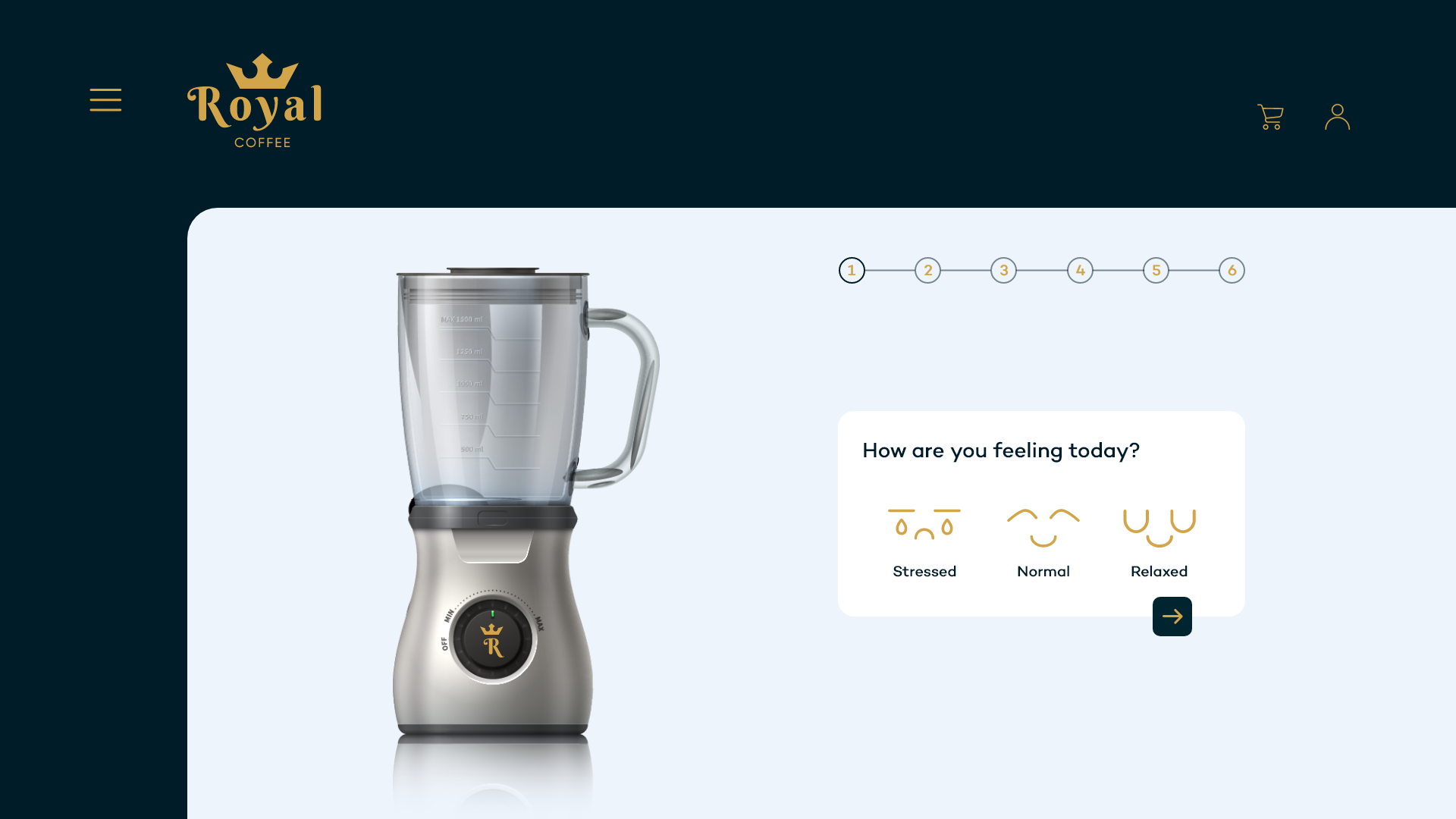
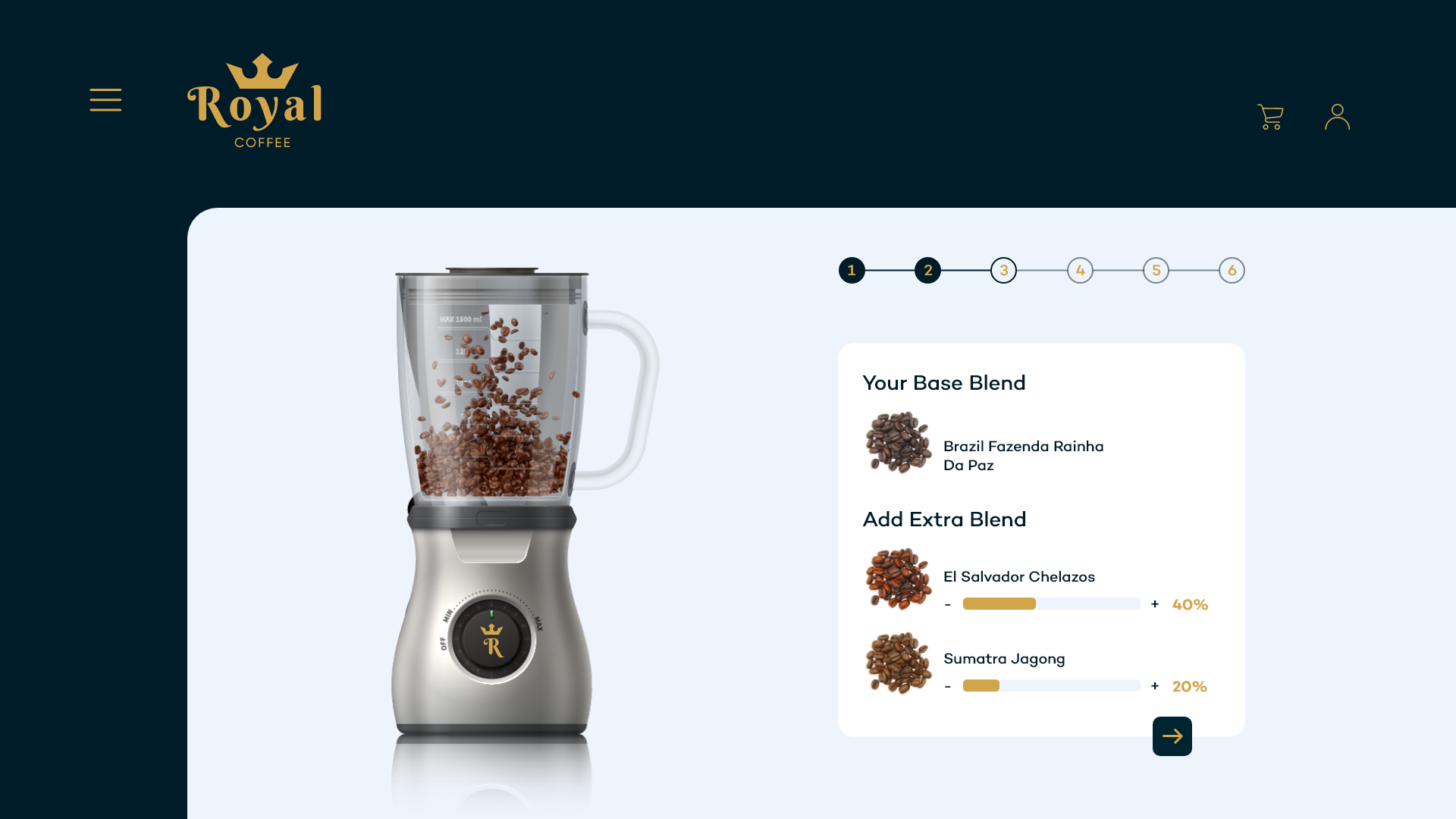
No accessibility requirements, audit, or validation evidence appears in the supplied materials. Before implementation, the concept would need accessible names and keyboard paths for mood and blend controls; text alternatives for product visuals; sufficient contrast; non-colour indicators for selection state; and clear summaries of price, blend composition, grind, and weight before purchase.
The supplied visual work demonstrates a reusable concept direction rather than a documented design system: a dark-navy canvas, gold accent colour, rounded white content panels, a multi-step progress treatment, product cards, choice controls, and branded packaging imagery. No token library, component specification, or production design-system handoff is included in the available evidence.
The evidenced output is a coherent UX design-task concept and a set of supporting artefacts: research summary, personas, journey map, ideation, task flows, storyboards, sitemap, wireframes, and high-fidelity screens. The material does not establish that Royal Coffee was built, tested with users, or launched.
Evidence note: 41 survey participants, 13 questions, two personas, and a 20-blend concept scope are recorded in the supplied presentation. They describe the project inputs and scope, not product impact.
This project demonstrates how a sensory, high-consideration purchase can be translated into digital decision support. The enduring design lesson is to make a complex catalogue easier to enter while preserving customer control: a recommendation can create momentum, but the customer must still understand and adjust what they are buying.
Design-task materials and working photographs supplied by Shubham Gupta. Royal Coffee is presented as the design-task concept described in the source presentation. The referenced benchmarking brands, visual inspiration, and product imagery remain subject to their respective owners; their usage and licensing are not documented in the supplied materials.