
Situation
Clinical-platform users could encounter an access issue without a clear in-product route to the right support team, phone number, email address, or ticketing channel.
Case study / 01 · Implemented
A four-week UX initiative that turned a fragmented support journey into an implemented, configurable in-product experience, validated with seven representative users.
An implemented support workflow averaged under one minute across seven representative users.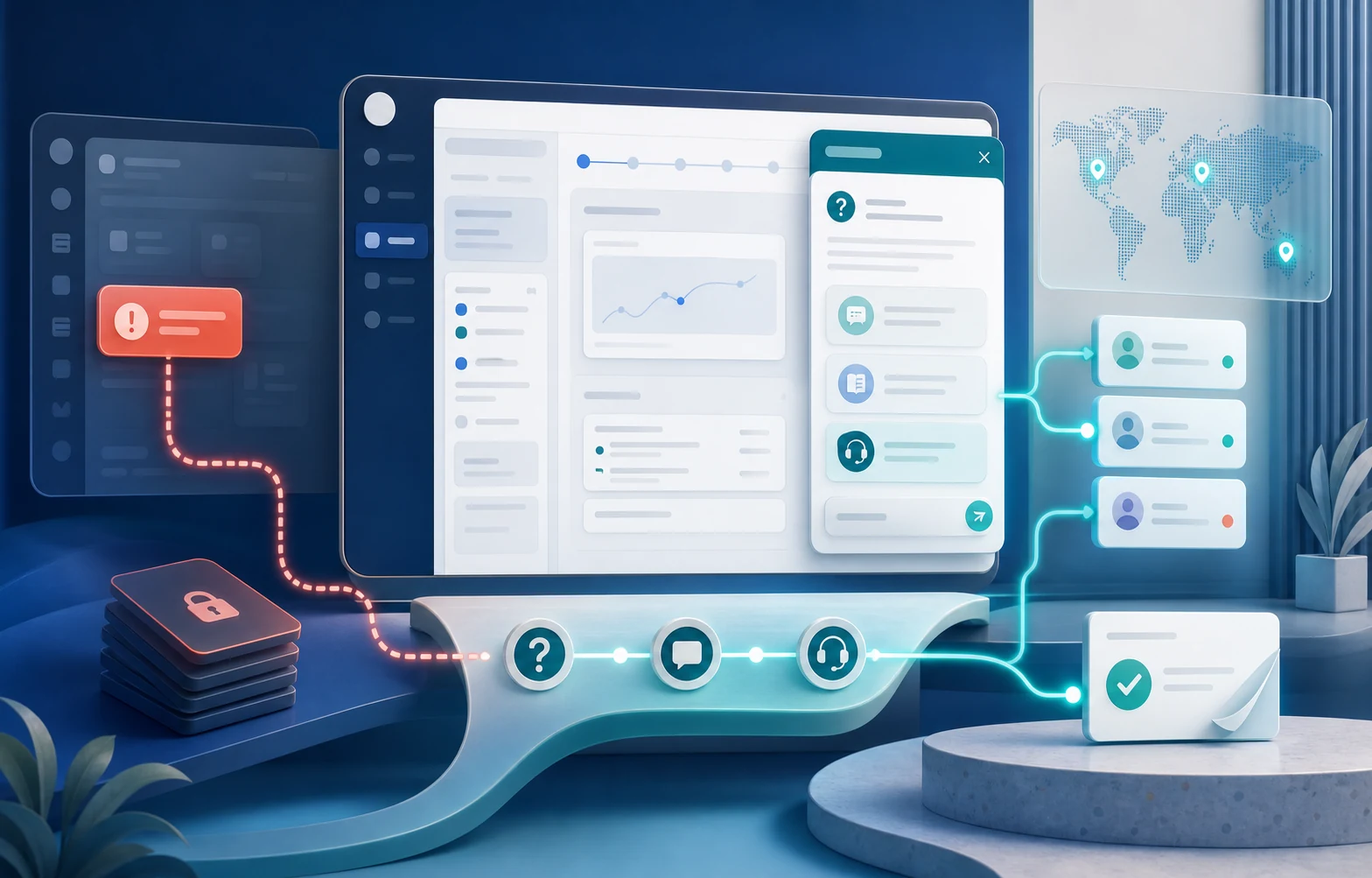
At a glance
Evidence to decision
Clinical-platform users could encounter an access issue without a clear in-product route to the right support team or channel.
Customer correspondence, experience reviews, and support-pattern research exposed fragmented regional and product-specific routes and handoffs that lacked useful context.
Support needed to appear at the point of failure, route people to configured channels, and preserve enough product context for the receiving team to act.
Create a focused support bridge on the login and authenticated surfaces, backed by administrator-controlled contact and ticketing options, then structure the email handoff.
Implemented login and in-product support panels, administrator configuration, and a later guided email workflow.
The initial experience shipped in two sprints; seven representative users completed the tested workflow in under one minute on average, and the email enhancement followed approximately six months later.
Clinical-platform users could encounter an access issue without a clear in-product route to the right support team, phone number, email address, or ticketing channel.
Design an in-workflow support experience for the login and application surfaces, together with administrator controls for configuring regional contact and ticketing options.
Aligned the scope with stakeholders, reviewed the existing experience and design-language adoption, researched support patterns, mapped the flow, iterated from Bridge V1 to V2, and supported implementation and timed usability testing.
The support experience and administrator configuration were implemented after two sprints. Seven representative users completed the support workflow in under one minute on average, and a structured email workflow was implemented approximately six months later.
IntelliSpace Precision Medicine brought several clinical applications into one platform for teams involved in cancer diagnosis, treatment planning, patient history, hospital communication, and document management. Its users included oncologists, radiologists, pathologists, and hospital administrators.
The product experience, however, did not provide a reliable route from a problem to the right support channel. This project introduced customer support at the points where users needed it, while giving administrators control over the contact information shown for each region and organisation.
A doctor opened the platform but could not log in. The interface offered no clear support path, so the doctor called a number shared with the wider group. The person who answered did not understand which product the doctor meant.
What looked like a login problem exposed a broader service gap: support information lived outside the workflow, routes varied by market and product, and the handoff did not consistently preserve enough context for the next team to act.
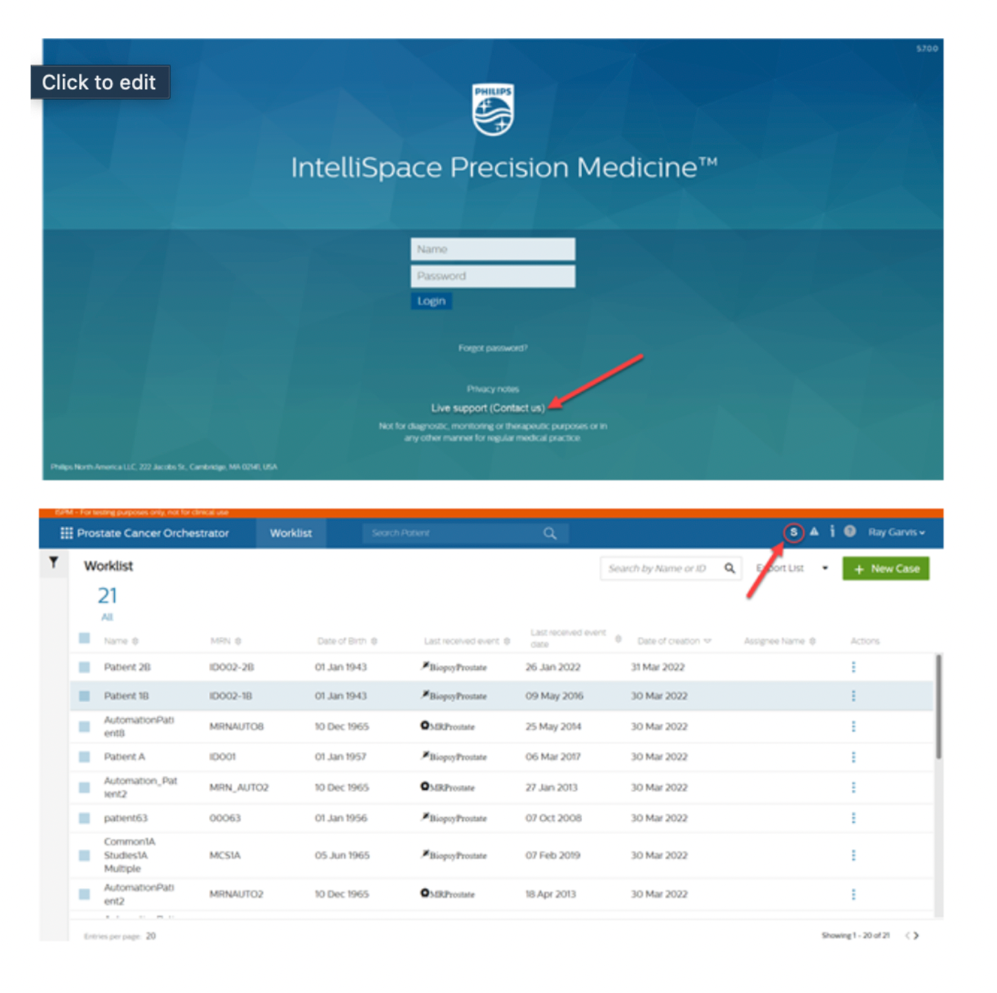
As the UX Designer, I worked across the initial two-sprint delivery and the later email enhancement.
The experience served clinical specialists and hospital administrators working across a SaaS platform of connected applications. A support route needed to work both before sign-in and inside the authenticated product because an access issue could prevent users from reaching in-product help.
The solution also had two audiences: clinical-platform users seeking help and administrators maintaining the correct regional email addresses, phone numbers, and external ticketing channels.
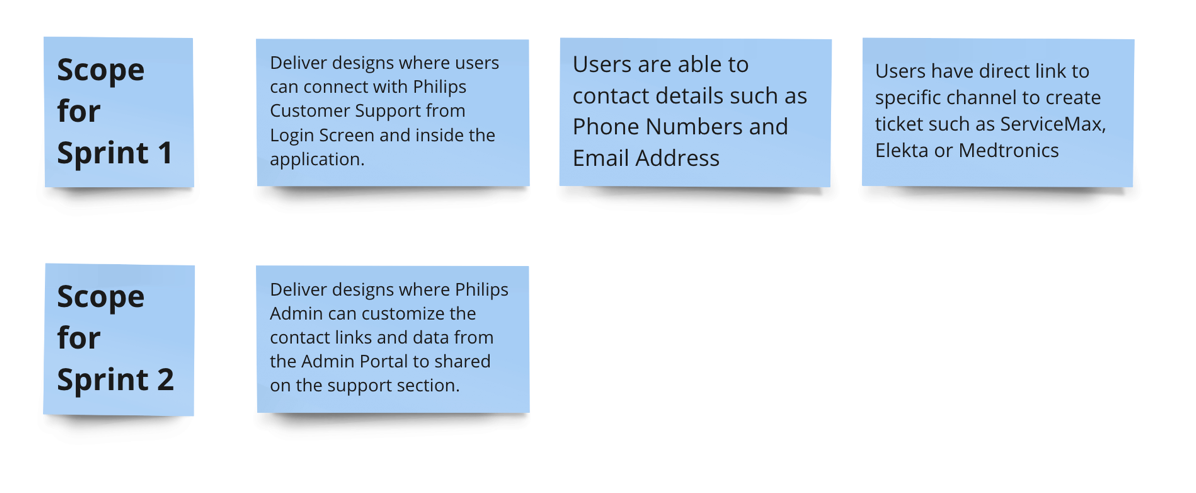
I aligned the scope with stakeholders, reviewed the existing product experience, and examined how comparable software made help discoverable. The work combined customer correspondence, a heuristic review, design-language assessment, and secondary research into support placement and channel selection.
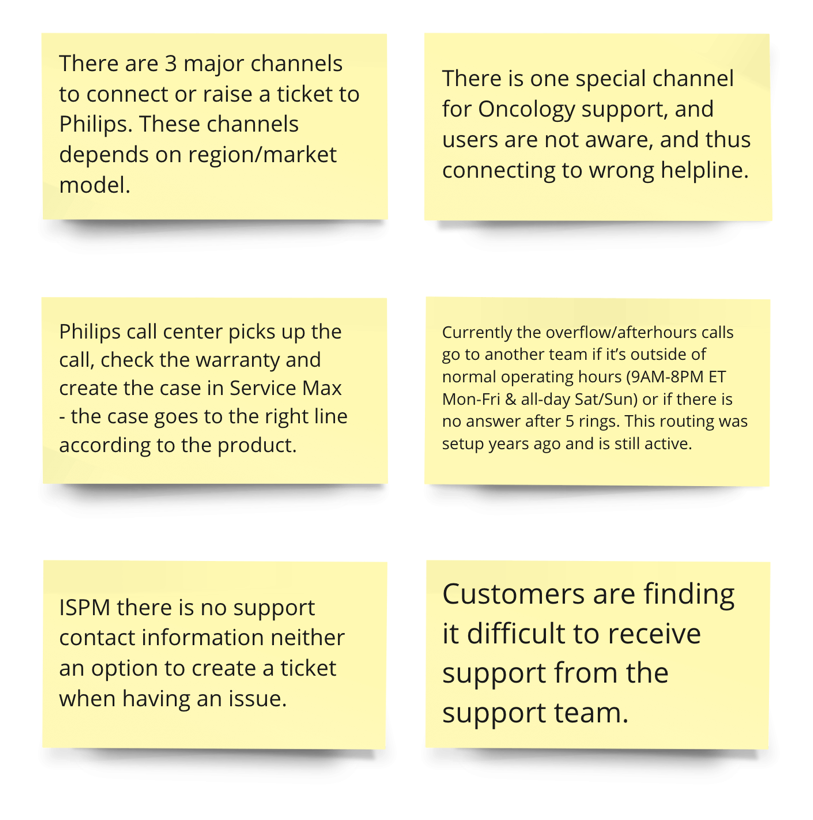
The review showed that users could face several possible contact routes, including region-specific phone support and separate ticketing channels. Without product-aware guidance inside the application, they could reach the wrong team or begin a support request without the context needed to resolve it.
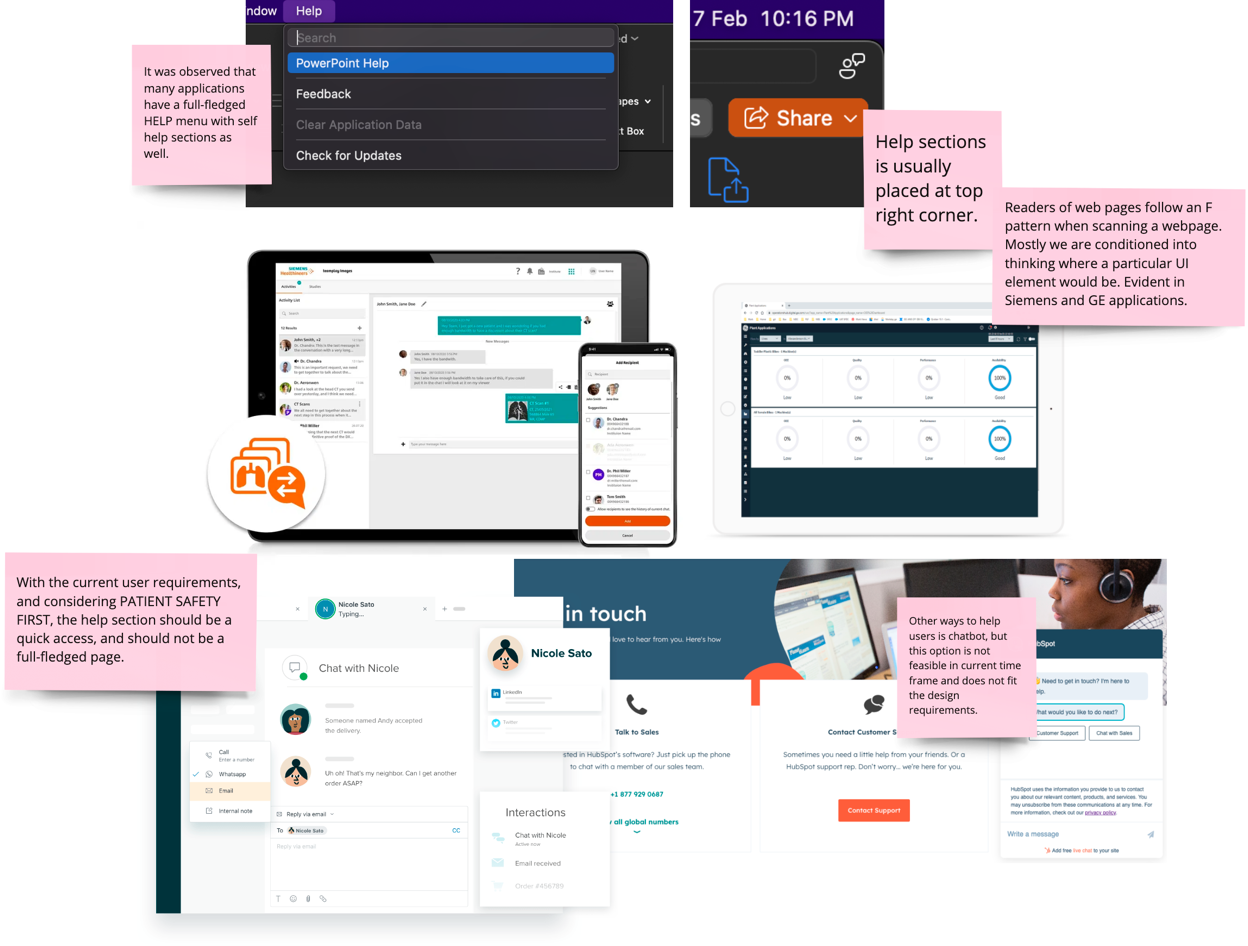
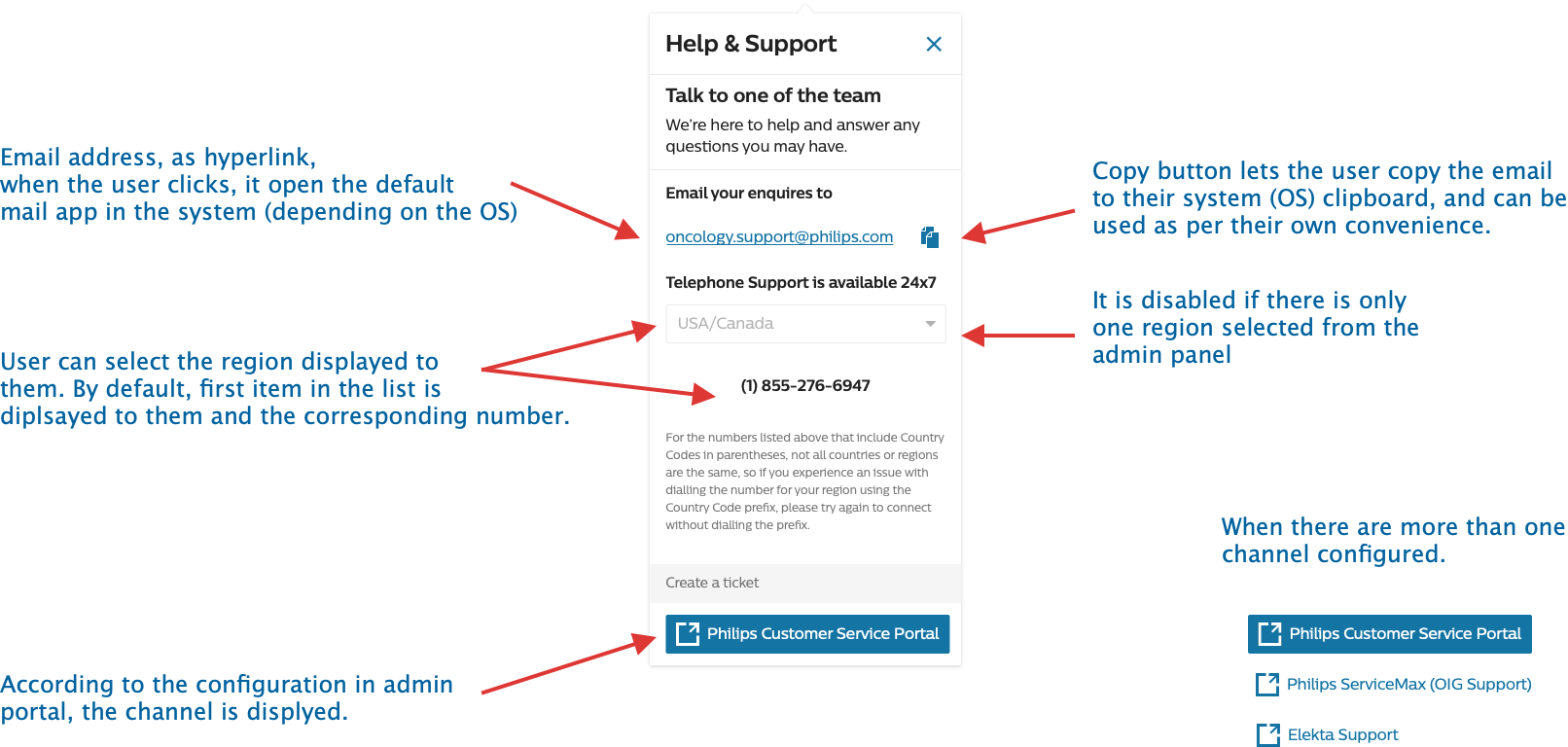
The information architecture separated self-help content from direct contact and ticketing routes. A persistent Help & Support entry point opened a focused panel, allowing users to review contact information, select the relevant region, or continue to a configured external support channel.
For the first release, the workflow was deliberately narrower than the long-term concept. It prioritised direct access to the right email address, regional phone number, and available ticketing channel.
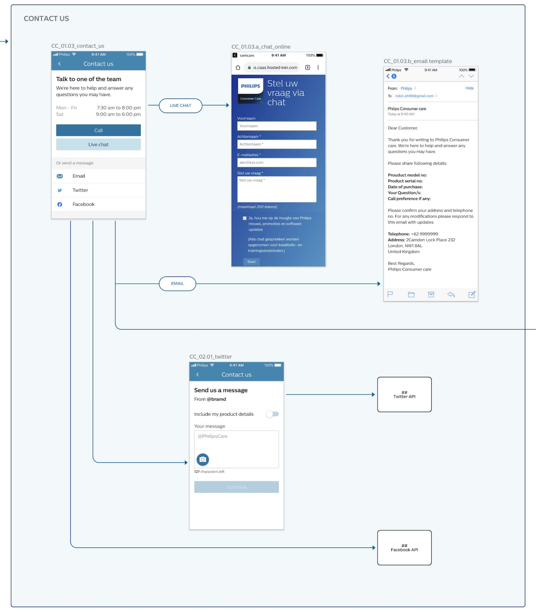
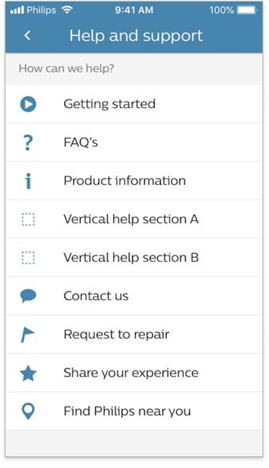
The long-term proposal combined getting-started guidance, frequently asked questions, product information, direct contact, and ticketing routes in one Help & Support menu. The four-week implementation focused first on the smallest useful bridge between the user and the correct support channel.
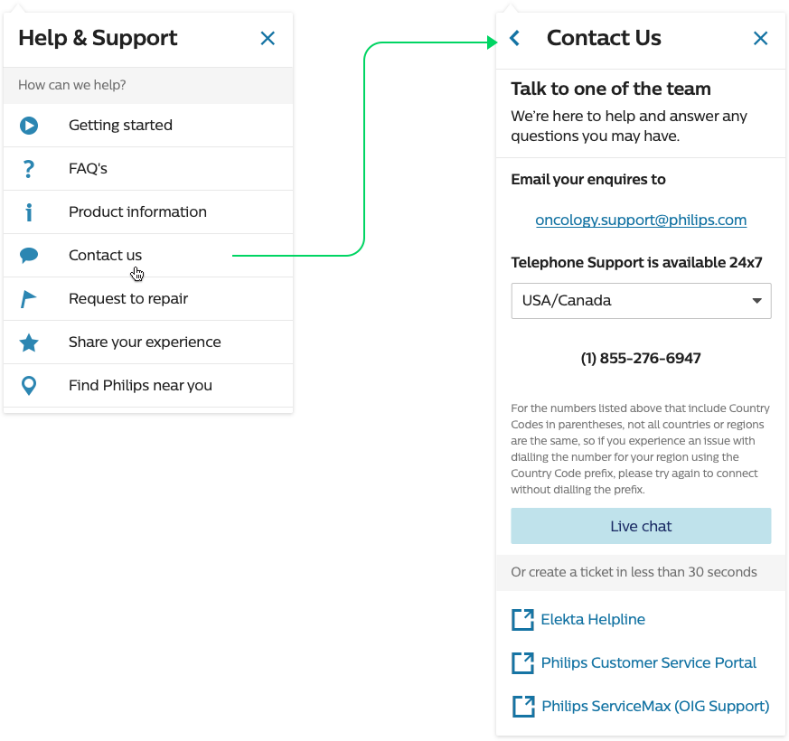
Bridge V1 introduced an email link, a copy action, regional phone selection, and configured external ticketing links. It established the necessary hierarchy but carried more interaction detail than the delivery window could support.
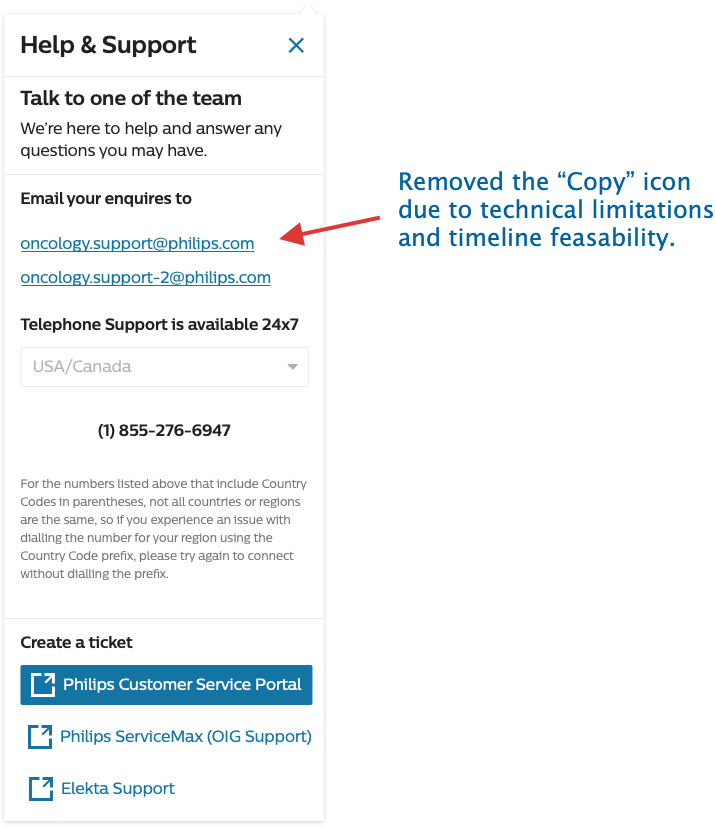
Bridge V2 removed the copy control because of technical and timeline constraints, supported more than one configured email address, and retained the region and ticket-channel logic. This version moved into implementation.
Timed usability testing with seven representative clinical-platform users measured how quickly they could complete the support workflow. Average completion was under one minute.
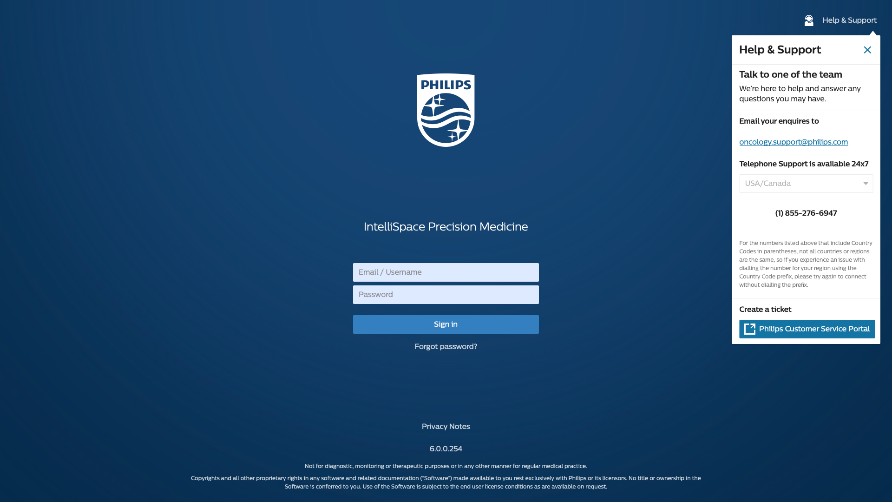
The implemented support panel was available from both the login experience and the authenticated administrator portal. Users could see the relevant email address, select an available region to reveal the correct phone number, and continue to configured ticketing channels without first searching outside the product.
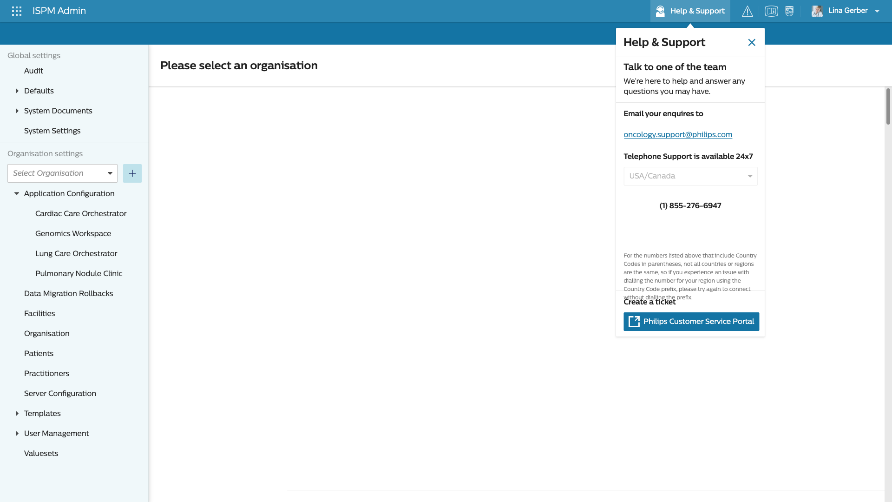
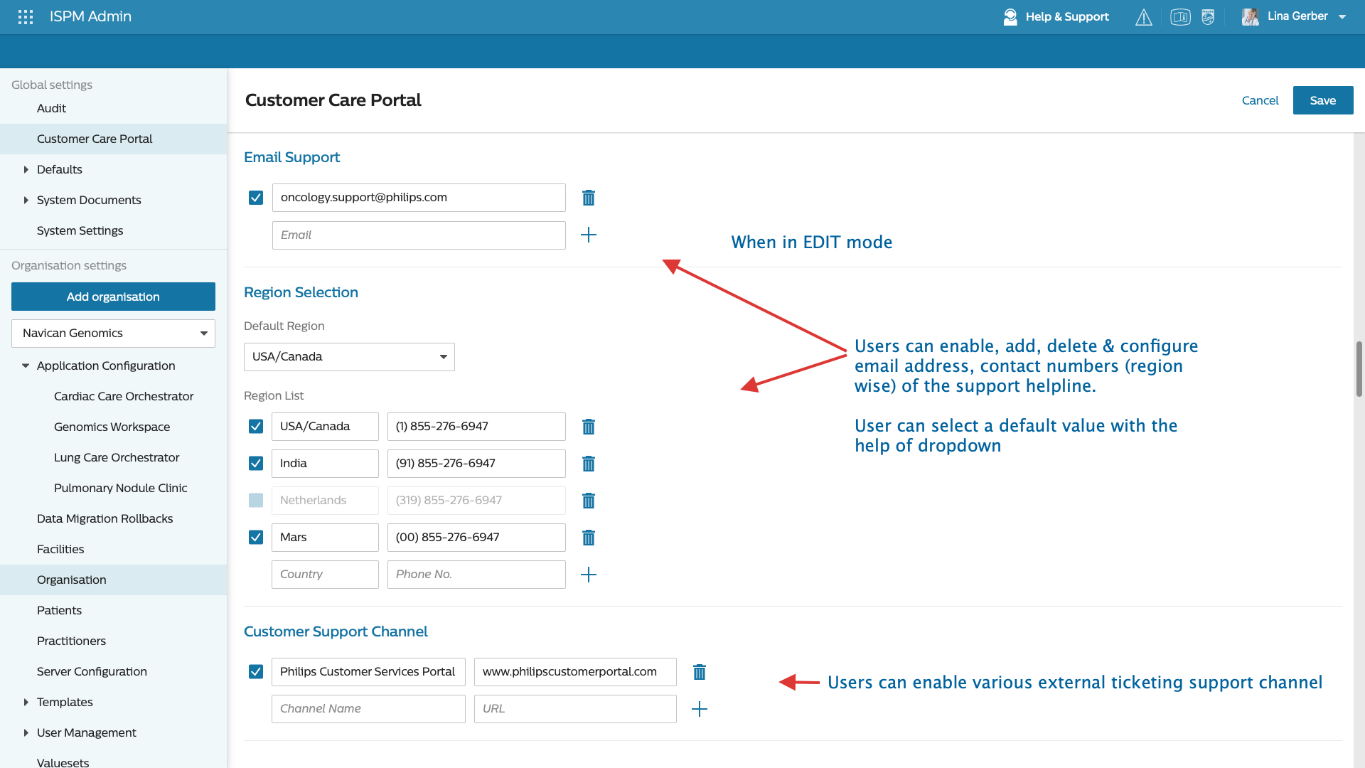
Administrators could enable, add, remove, and edit support email addresses, regional phone numbers, defaults, and external ticketing channels. That configuration controlled which options appeared in the user-facing panel.
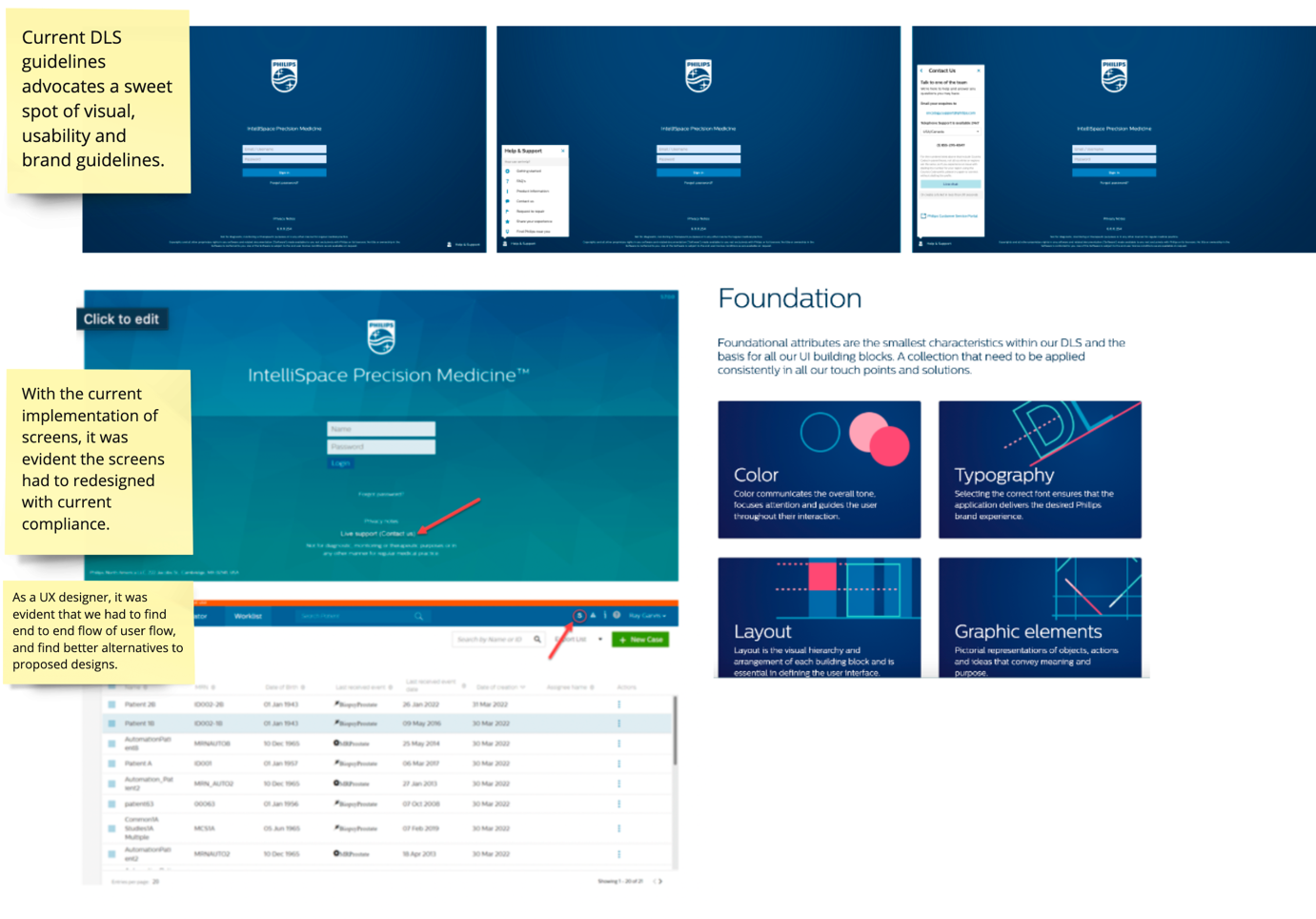
The existing product screens reflected an earlier visual language. I reviewed the experience against the current design guidance and adapted the support interaction to established colour, typography, layout, and graphic-element foundations.
This was an alignment exercise rather than a claim of creating a new design system. Reusing existing patterns reduced design and engineering ambiguity while keeping the support experience consistent with the wider platform.
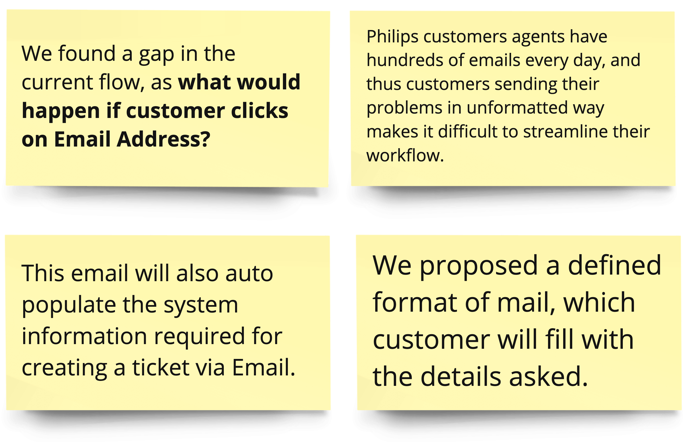
Reviewing the end-to-end journey uncovered another gap: selecting an email address opened an unstructured message. Support teams received many emails each day, and inconsistent problem descriptions made requests harder to triage.
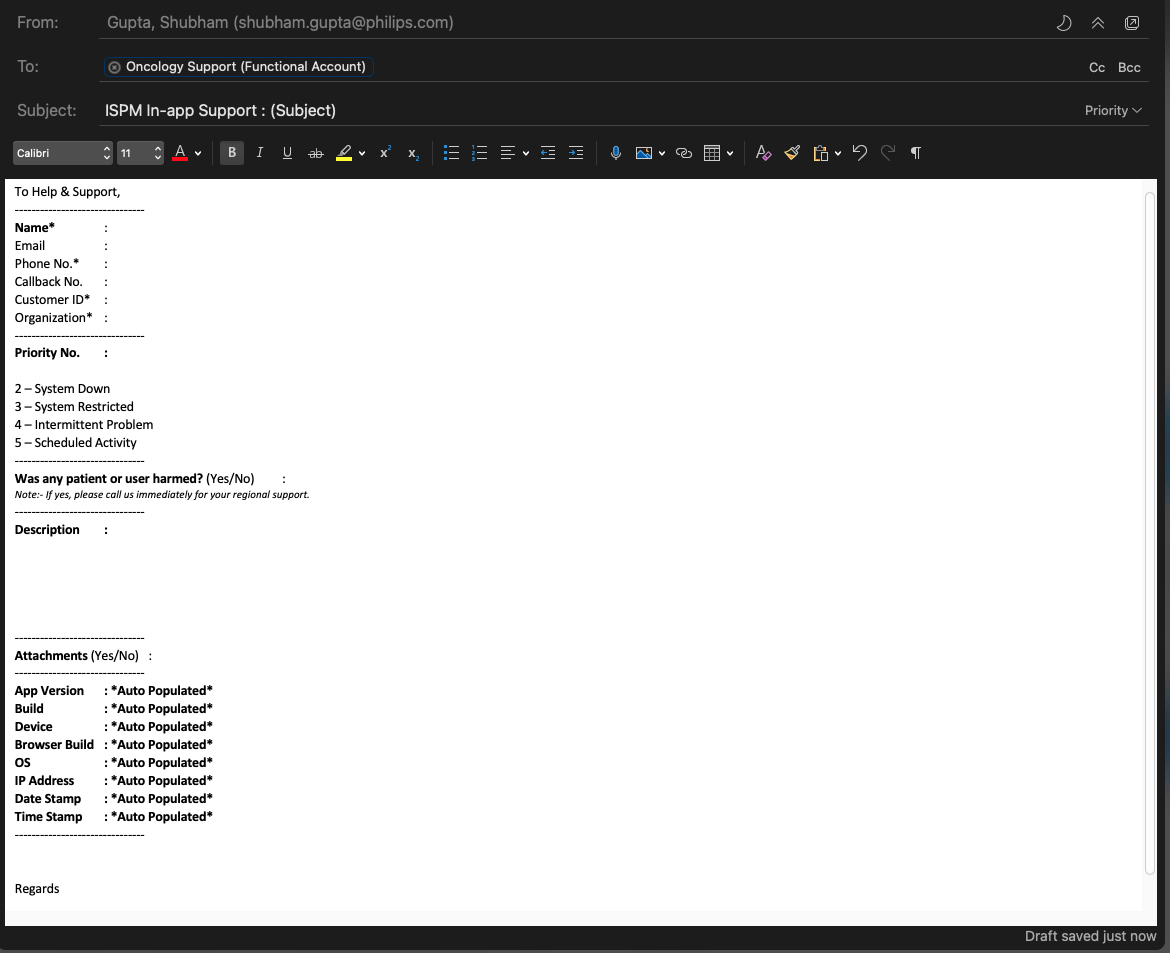
The follow-up solution introduced a defined email format with guided questions and automatically supplied system context. This workflow was implemented approximately six months after the initial in-product support release.
The initial support experience and administrator configuration were implemented within two sprints. In timed usability testing, seven representative users completed the workflow in under one minute on average.
Approximately six months later, the structured email workflow was also implemented, extending the original experience from finding the correct channel to sending a more actionable request.
Measured result: under one minute average completion across seven representative users during timed usability testing.
The project reinforced that a support entry point is only one part of the experience. Following the journey through contact selection, regional routing, ticket creation, and email handoff revealed issues that were invisible when each screen was reviewed in isolation.
It also showed the value of separating the long-term concept from the smallest useful implementation. The two-sprint bridge resolved the immediate access problem, while the later email enhancement improved the quality of the handoff without blocking the initial release.