
Situation
A connected coffee-mug concept needed a retail expression that could make the product more tangible and memorable at the point of encounter.
Case study / 01 · Concept Proposal
An image-led exploration of how a connected coffee mug could become a memorable Nescafé retail encounter through form, light, material, and the five senses.
Three retail directions translated the connected mug into a five-senses experience proposal.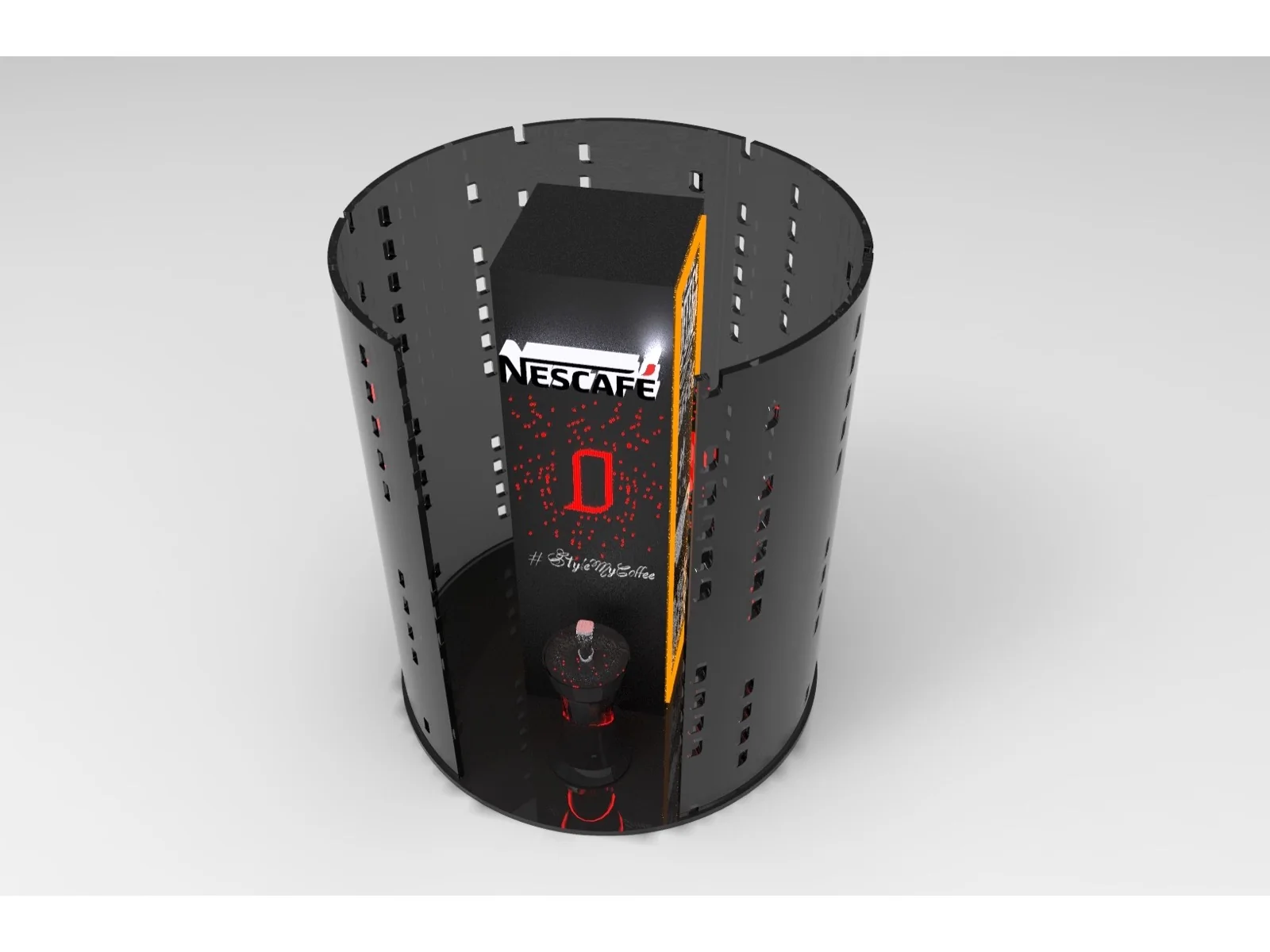
At a glance
Evidence to decision
A connected coffee-mug concept needed a retail expression that could make the product tangible and memorable at the point of encounter.
The supplied brief, product-system visuals, mood board, sketches, and concept archive framed an experience centred on form, light, material, and sensory engagement; no user study or production brief was supplied.
The proposal treated the mug as the centre of a physical encounter rather than as an object presented only on a pack or shelf.
Explore three spatial directions and map sight, smell, sound, taste, and touch to proposed retail moments around the product.
Three visual retail concepts supported by a mood board, sketches, renders, product visuals, and a sensory-experience framework.
The archive documents concept proposals only; installation, testing, client approval, manufacturing, and commercial rollout are not evidenced.
A connected coffee-mug concept needed a retail expression that could make the product more tangible and memorable at the point of encounter.
Develop three retail design directions that connected the product, its visual identity, and a sensory customer experience.
Created mood-board studies, ideation sketches, spatial concepts, and presentation visuals informed by a five-senses framework.
Produced three retail concept proposals and a set of experience-enhancement ideas. Installation, testing, and commercial deployment are not documented in the supplied archive.
Nescafé Connected Coffee Mug was a 2018 retail concept proposal developed around a connected mug product system. The work explored how the product could be encountered beyond the pack or shelf: as a focused retail moment shaped by spatial form, graphic identity, material cues, and sensory engagement.
Project status: concept proposal. The supplied archive contains the presentation, concept sketches, renders, mood-board material, and product visuals. It does not document a built installation, user testing, client approval, or commercial rollout.
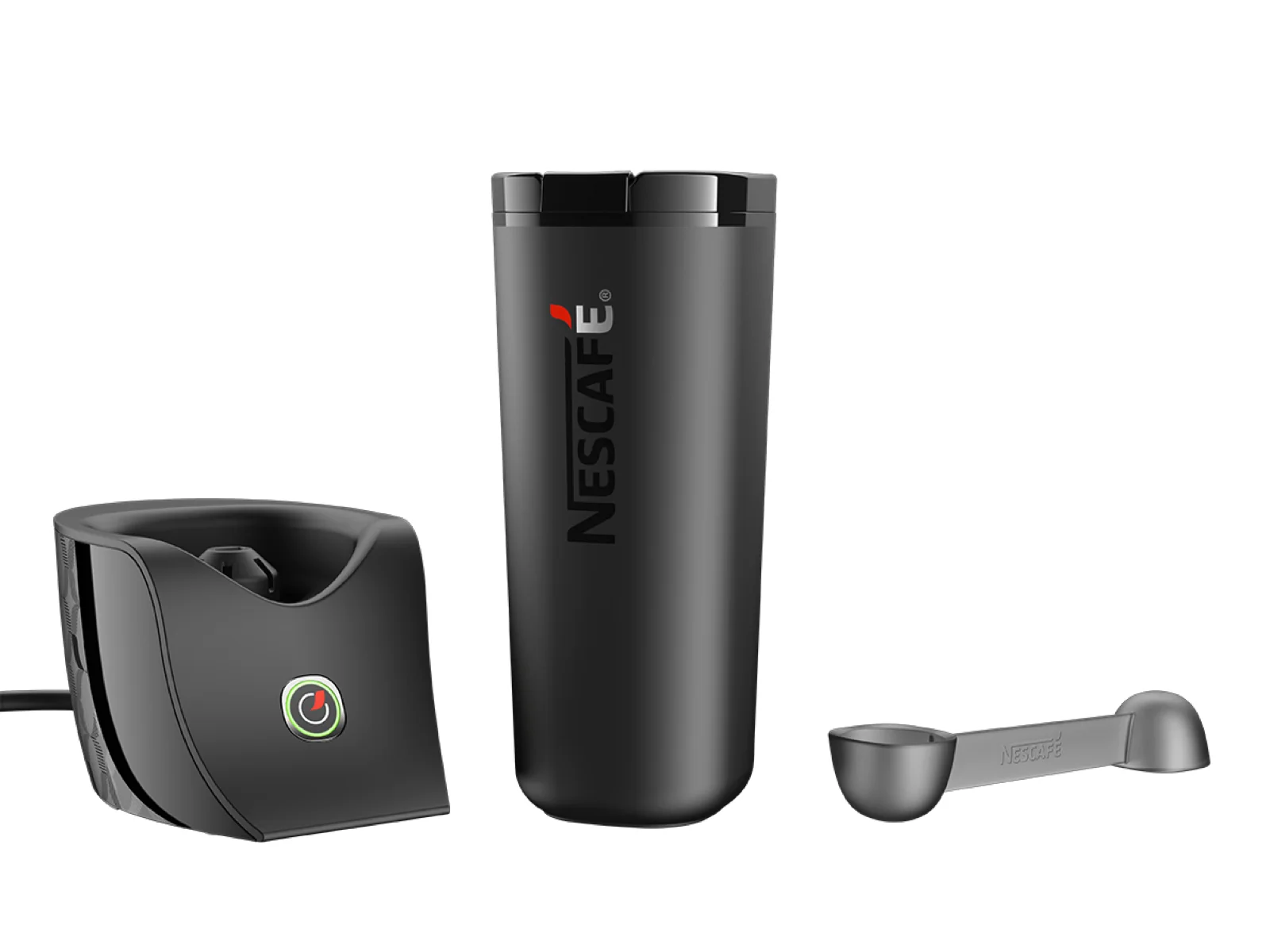
The supplied presentation frames the work as three concept proposals, made with the user experience in mind. Rather than presenting the retail environment as a neutral backdrop, the concepts use the product as the centre of an encounter: an object to see, approach, touch, and taste through.
The source material does not preserve a formal research plan, participant evidence, customer journey, site specification, dimensions, budget, or production brief. Those elements are intentionally not reconstructed here.
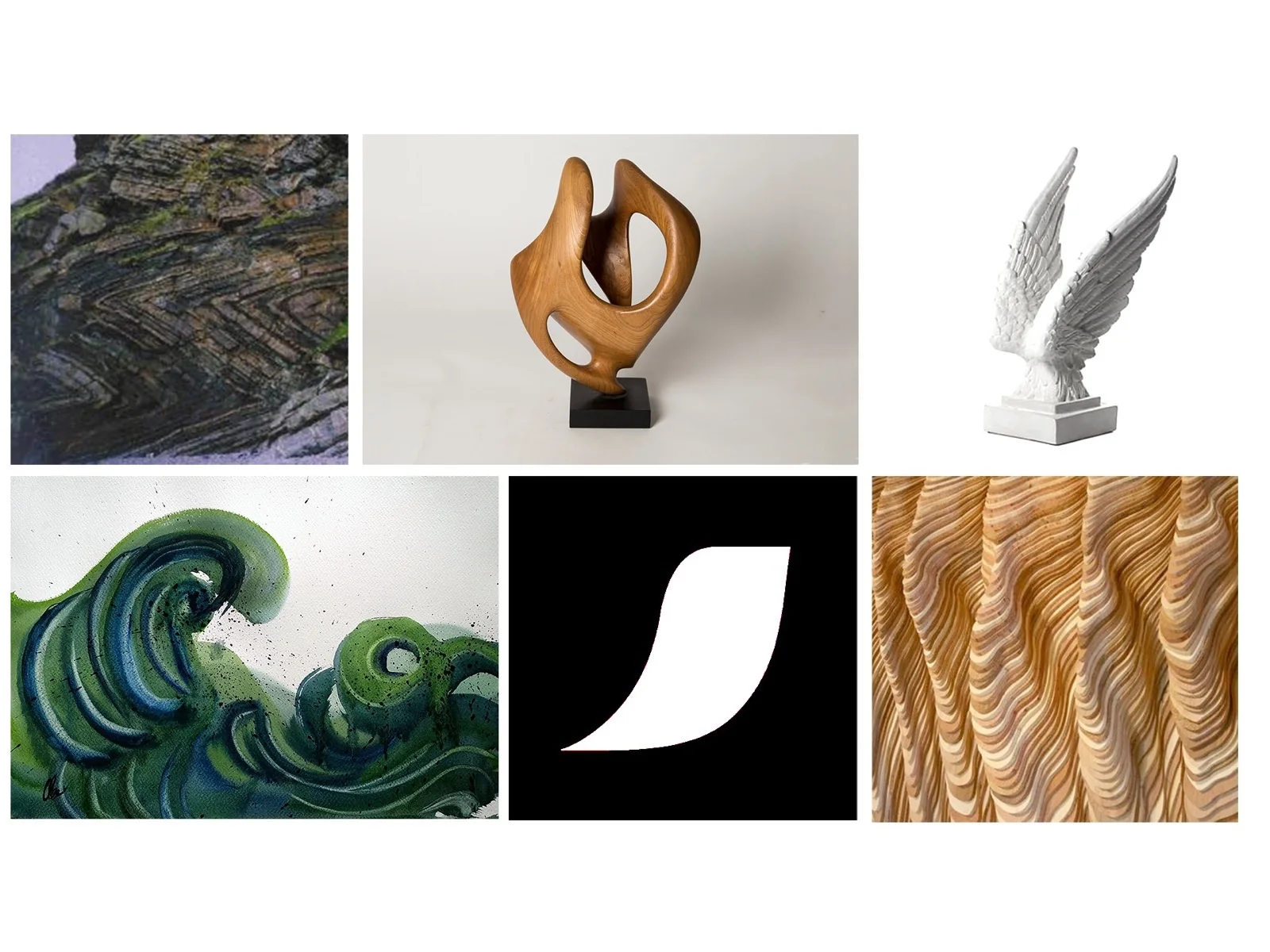
The mood board brought together flowing forms, tactile natural textures, sculptural silhouettes, and the expressive Nescafé mark. These inputs informed a retail language where organic movement and product display could coexist.

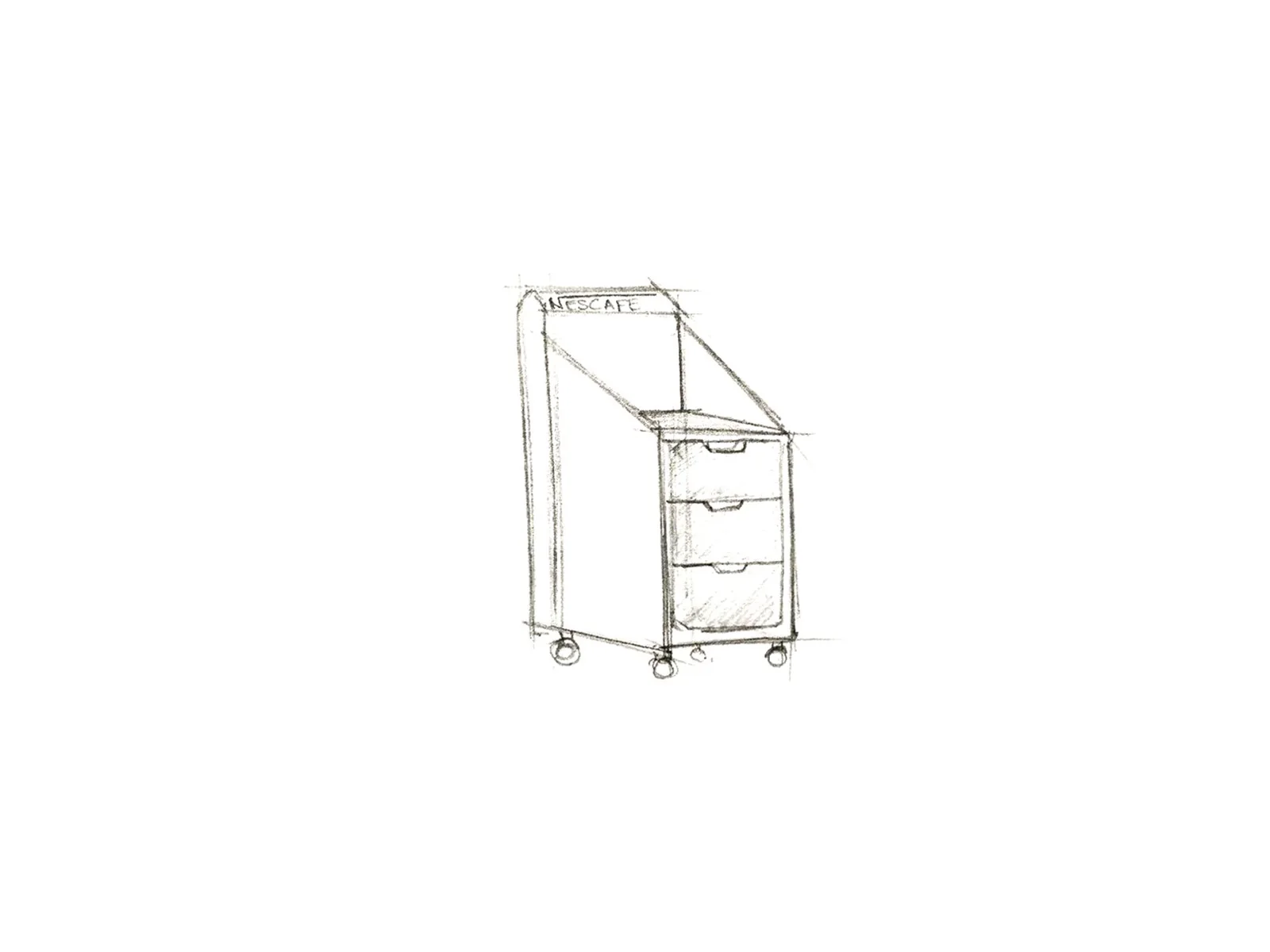
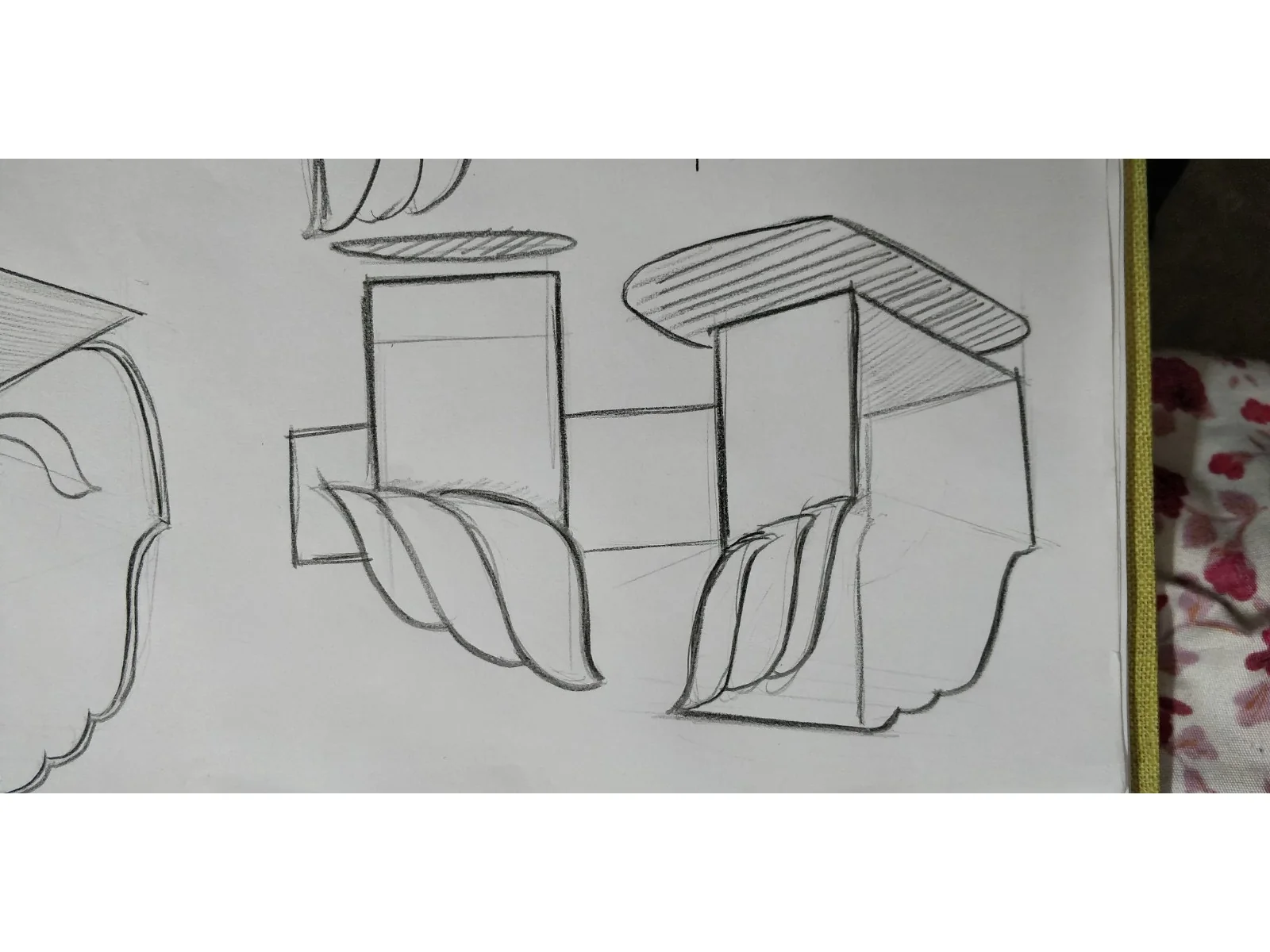
I developed hand-drawn studies to test how a compact product offer could occupy a taller retail structure. The sketches explore enclosure, storage, product visibility, and an approachable interaction zone before the concepts were visualised as retail forms.
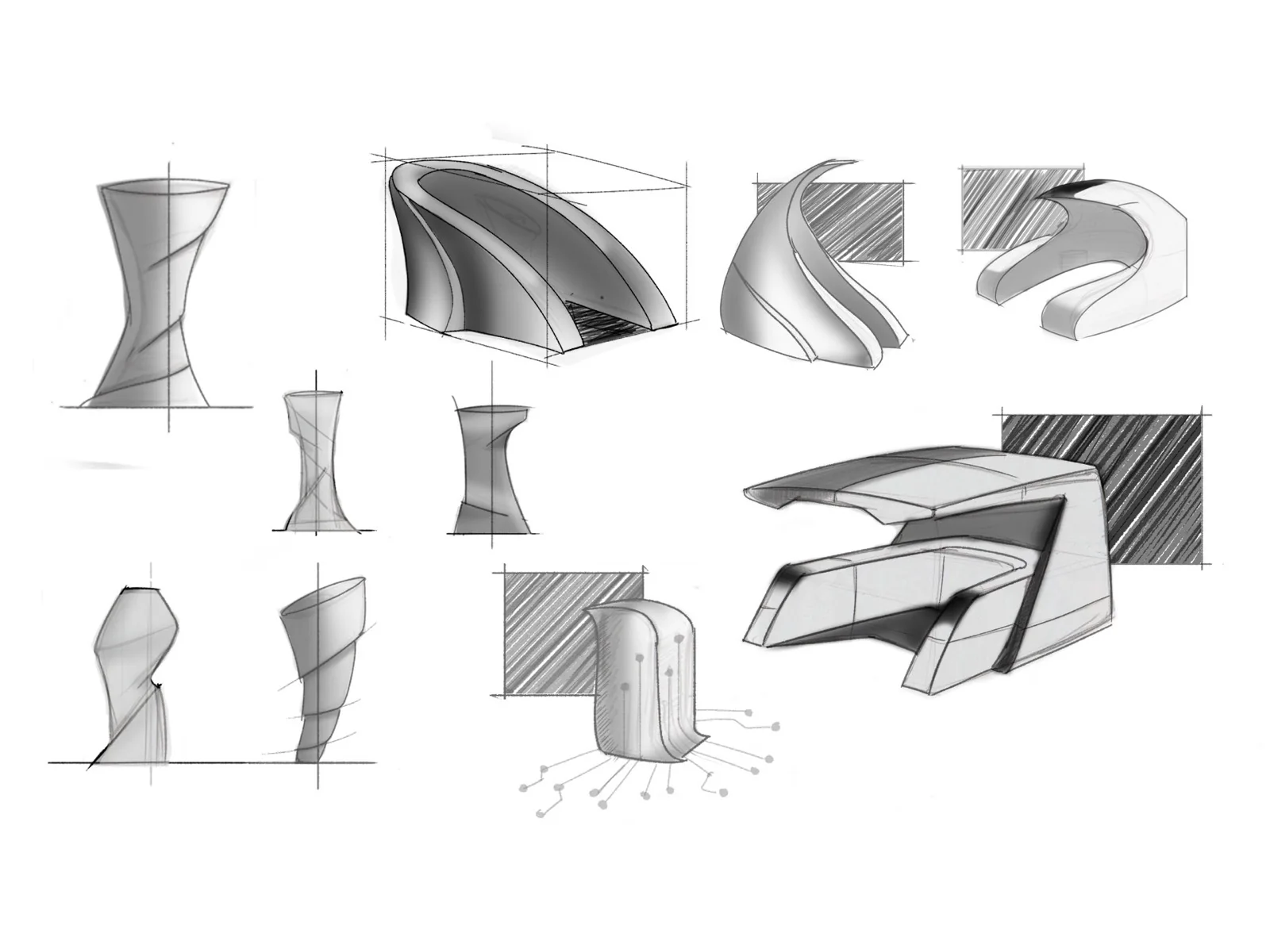
The archive identifies three proposals. The surviving concept visuals show distinct ways of placing the connected mug at the centre of the retail encounter:
The descriptions above name visible concept characteristics. The archive does not contain a recorded selection decision, feasibility assessment, or approval outcome.
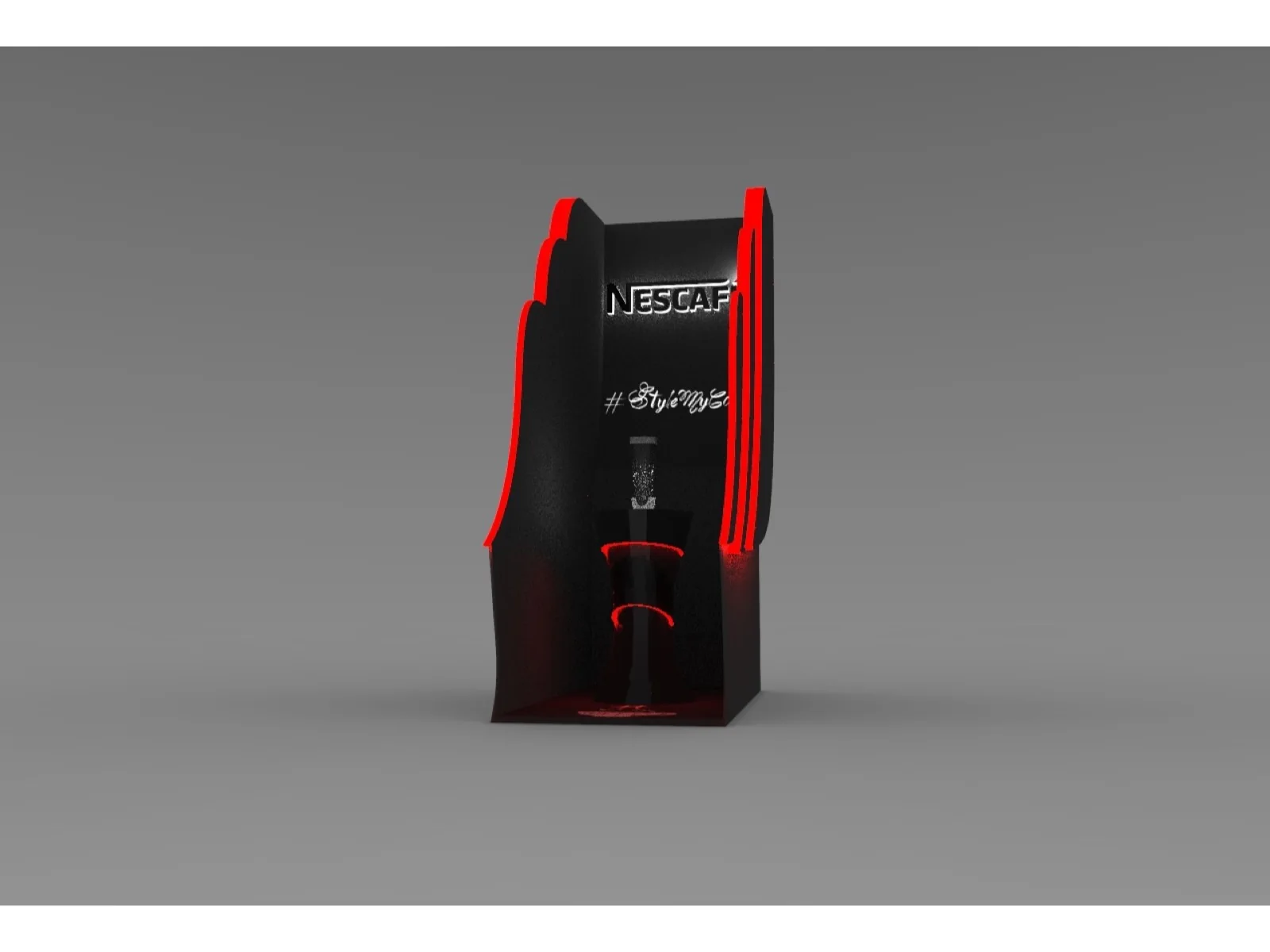
The presentation proposed a five-senses framework for the retail experience:
| Sense | Proposed touchpoint |
|---|---|
| Smell | Coffee aroma through a fragrance diffuser |
| Sight | Large-scale visuals and product lighting |
| Sound | A Nescafé jingle |
| Taste | Coffee tasting |
| Touch | Direct interaction with the product |
These are experience proposals documented in the presentation, not validated findings. The material does not establish the technical implementation, accessibility, operating model, staffing, hygiene requirements, or measured effect of any touchpoint.
The presentation also proposed additional ways to build theatre around the display:
Together, these ideas show an intention to connect a connected product to a more physical, memorable retail ritual. They remain proposal-stage ideas in the supplied material.
The evidenced outcome is a set of three visual retail concept proposals, supported by a mood board, sketches, product visuals, renders, and a sensory-experience framework.
The archive does not document a final design, a commissioned installation, testing, manufacturing, or post-launch performance. The case study therefore presents the work as concept exploration and design communication—not as evidence of a deployed retail experience.