Situation
The LT-20 Classic was technically capable, but its fragmented enclosure, operator strain points, maintenance needs, and inconsistent visual language weakened the overall product experience.
Case study / 03 · Concept
A nine-month industrial design collaboration with Ace Designers that translated field evidence, ergonomic constraints, and manufacturing realities into a coherent LT-20 Classic concept, native CAD, renders, and a physical appearance model.
Operator evidence shaped a manufacturing-aware CNC-lathe concept, native CAD, and a physical appearance model.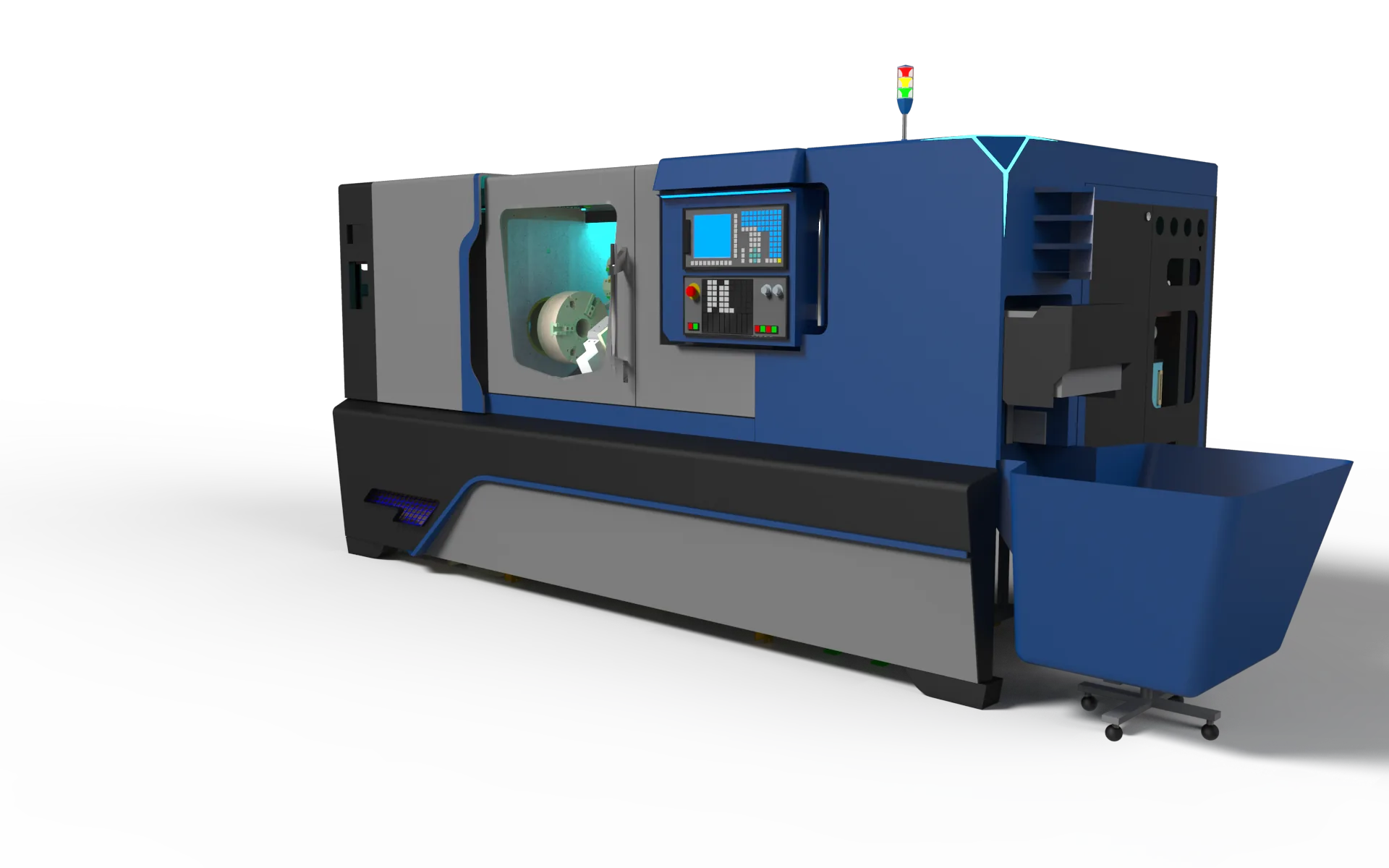
At a glance
Evidence to decision
The LT-20 Classic was technically capable, but its fragmented enclosure, operator strain points, maintenance needs, and inconsistent visual language weakened the overall experience.
Machine documentation, stakeholder and shop-floor research, IMTEX benchmarking, and a 14-response operator survey showed high functionality alongside weaker ease-of-use and appearance ratings and reported physical strain.
Appearance could not be separated from posture, guarding, service access, chip handling, manufacturing capability, and product-family coherence.
Advance the retained-guard direction because it stayed closer to in-house capability, avoided an imported roll-band mechanism, preserved the existing guard, and created storage within a unified enclosure.
A selected concept developed through component-level native CAD, renders, engineering drawings, and a painted physical appearance model.
The work resolved a manufacturing-aware industrial-design proposal; production adoption, functional validation, and measured post-design outcomes are not documented.
The LT-20 Classic was technically capable, but its fragmented enclosure, operator strain points, maintenance needs, and inconsistent visual language weakened the overall product experience.
Reframe the machine for a global market while respecting its existing architecture, guarding, service access, sheet-metal manufacturing process, and cost constraints.
We combined stakeholder research, shop-floor observation, an exploratory operator survey, ergonomic analysis, competitor benchmarking, sketching, native CAD, rendering, and physical model-making.
A retained-guard concept was selected and developed through component-level CAD, final renders, engineering drawings, and a painted physical appearance model. Production adoption and measured post-design outcomes are not documented.
Humanising the LT-20 Classic was a nine-month industrial-design collaboration with Ace Designers in Bengaluru. The project ran from January to September 2017 and focused on an established CNC turning centre whose technical capability was stronger than the experience communicated by its enclosure, operator touchpoints, and visual identity.
The brief began as a request to improve the machine's outlook and first impression for a global market. Fieldwork expanded that brief. The opportunity was not simply to style a new outer shell, but to connect appearance with operator posture, guarding, maintenance access, chip and coolant handling, manufacturing feasibility, and a recognisable product-family language.
Project status: selected industrial-design concept, native CAD, renders, engineering drawings, and a physical appearance model. The archive does not establish a production release, functional prototype, or measured post-launch outcome.
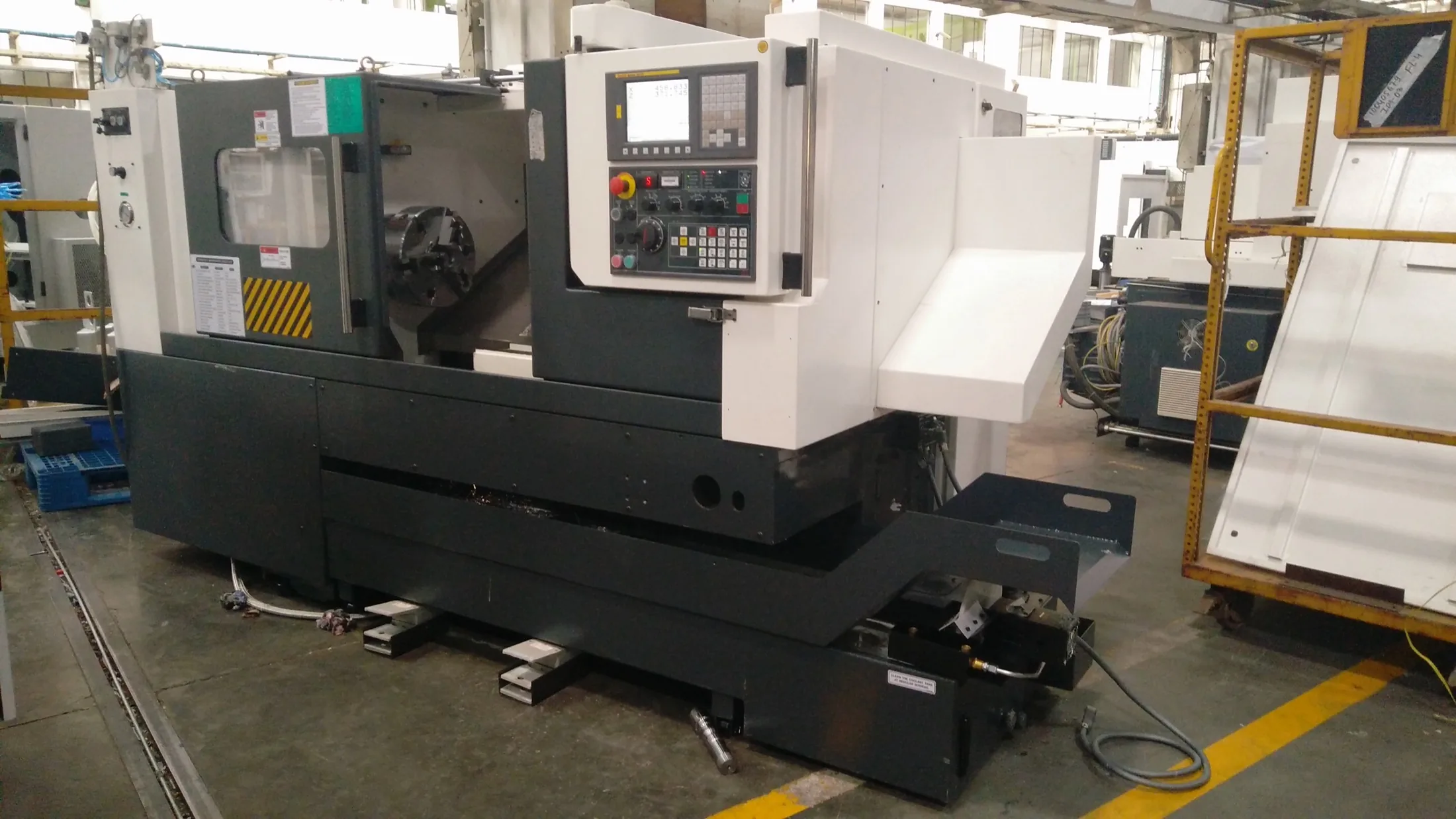
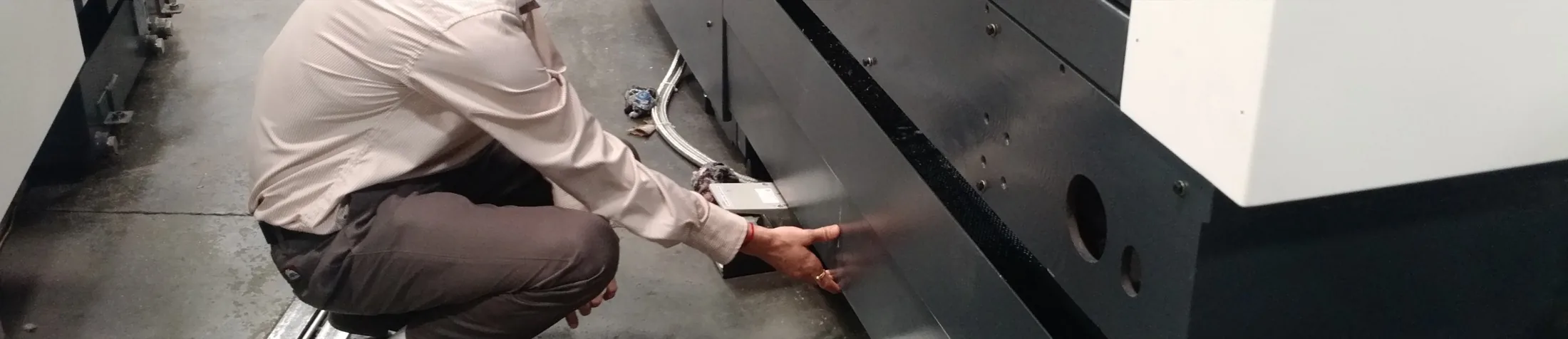
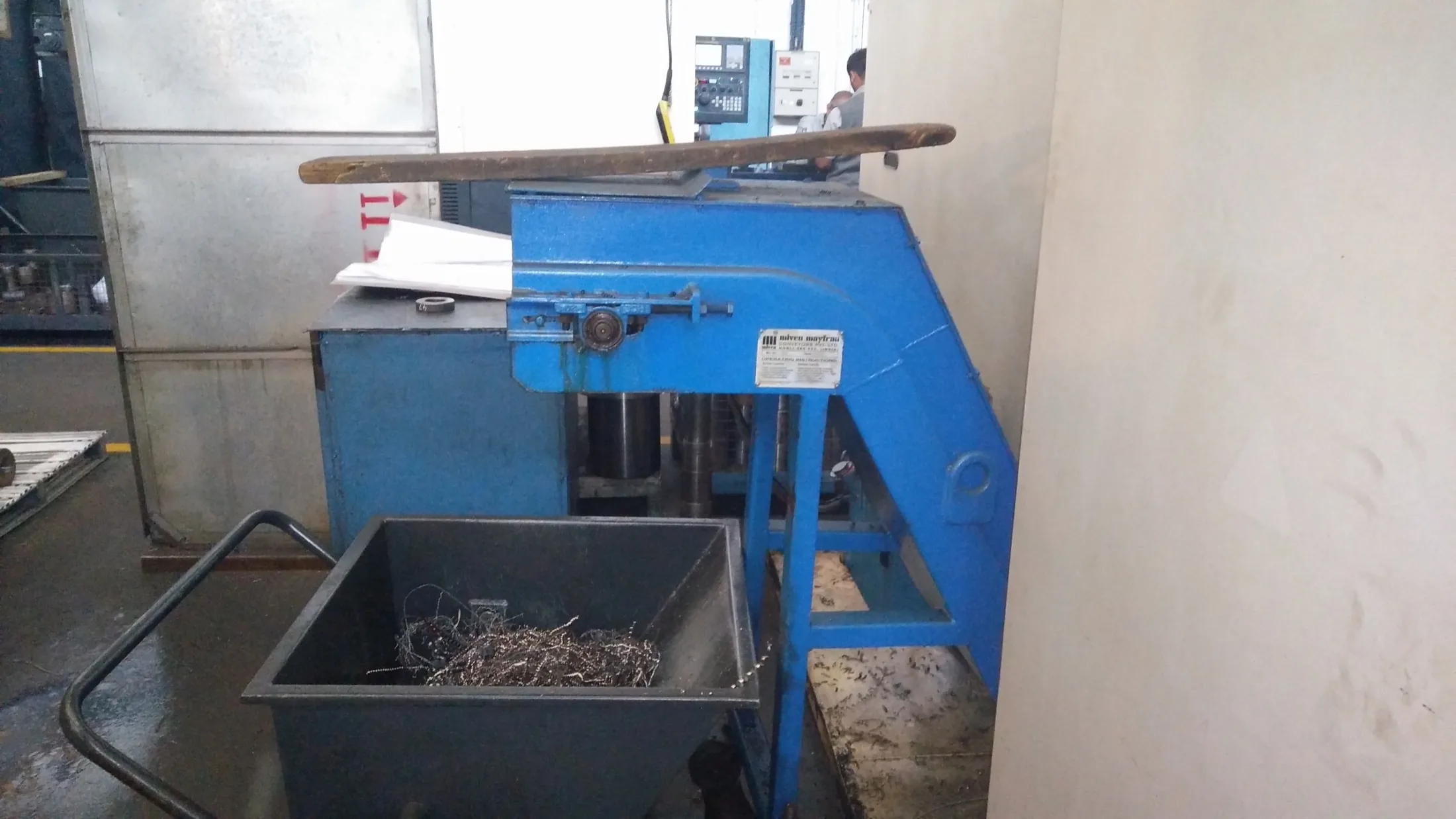
The existing LT-20 Classic was documented as a collection of visually separate enclosures, largely finished in black and white. The research also recorded practical concerns around chip collection, coolant filtration, chips becoming trapped near the door, the projecting stainless-steel guard, and the physical effort required to use and service the machine.
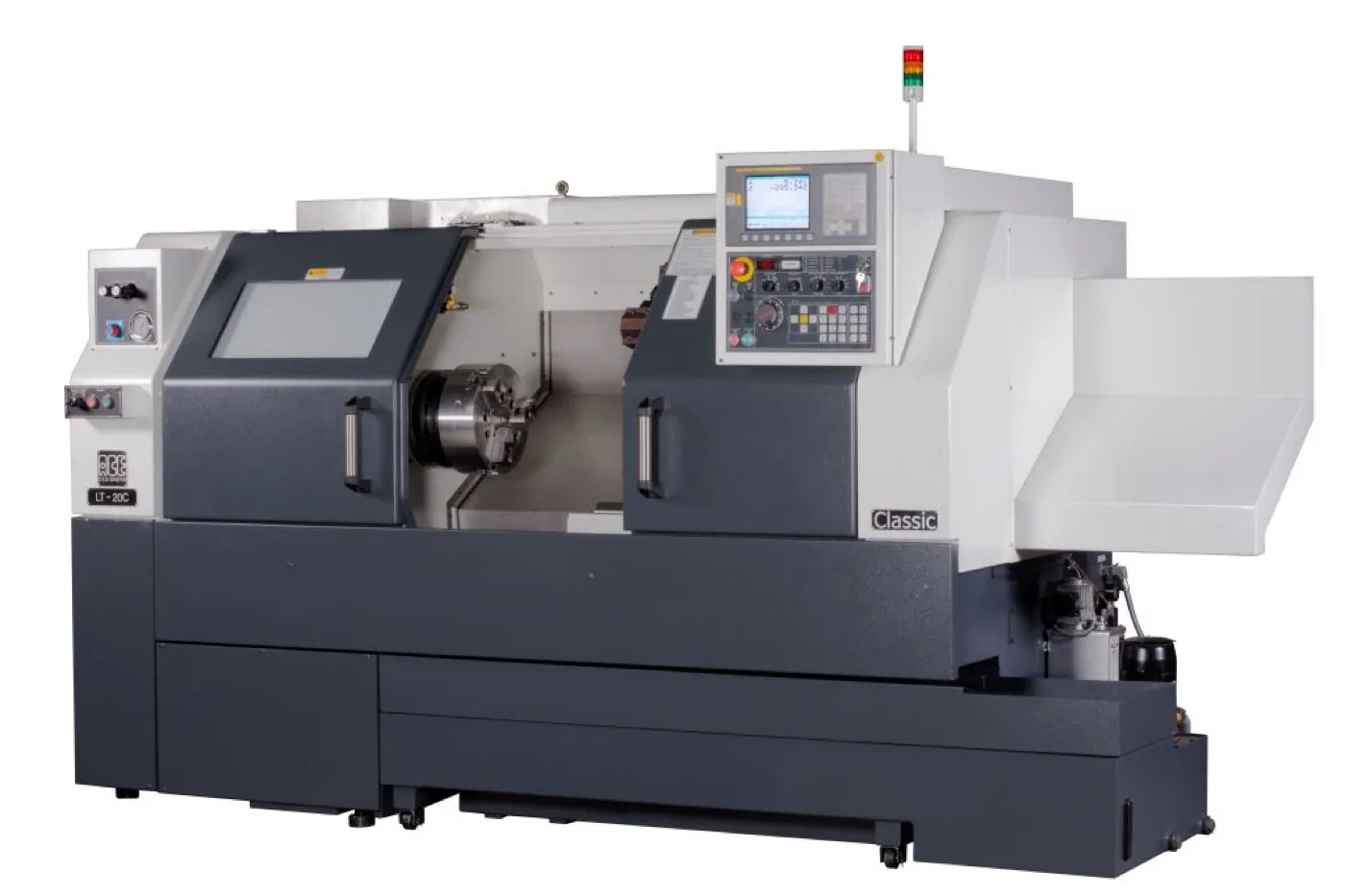
The central tension was clear: respondents rated the machine's functionality highly, while ease of use and appearance were weaker. The redesign therefore needed to preserve technical credibility while making the surrounding experience more coherent and considerate of the people who operated, maintained, cleaned, sold, and transported it.
I worked in a two-person design team with Aditya Sharma. I co-led the user research and ergonomic study, then owned the concept sketching, 3D modelling, and rendering used to develop and communicate the machine concepts.
Aditya co-led the research and ergonomic work. He owned the presentation, branding exploration, stakeholder management, and future-facing brand narrative. Major design decisions were shared.
The project considered a broader industrial system than the operator alone:
The working environment included rotating machinery, coolant and metal chips, guarded access, repeated maintenance, and uneven lighting. The available machine documentation also required doors and covers to remain unobstructed, guarding to stay closed while the spindle rotated, and sufficient clearance for maintenance and chip-conveyor access.
These realities became connected design constraints:
The constraints guided concept development. They were not all formally tested after design.
The project combined several evidence sources:
The archive records a one-week interview phase followed by shop-floor observation, but it does not preserve the interview participant count, recruitment method, interview guide, or a formal coding process. Those details are therefore left unclaimed.
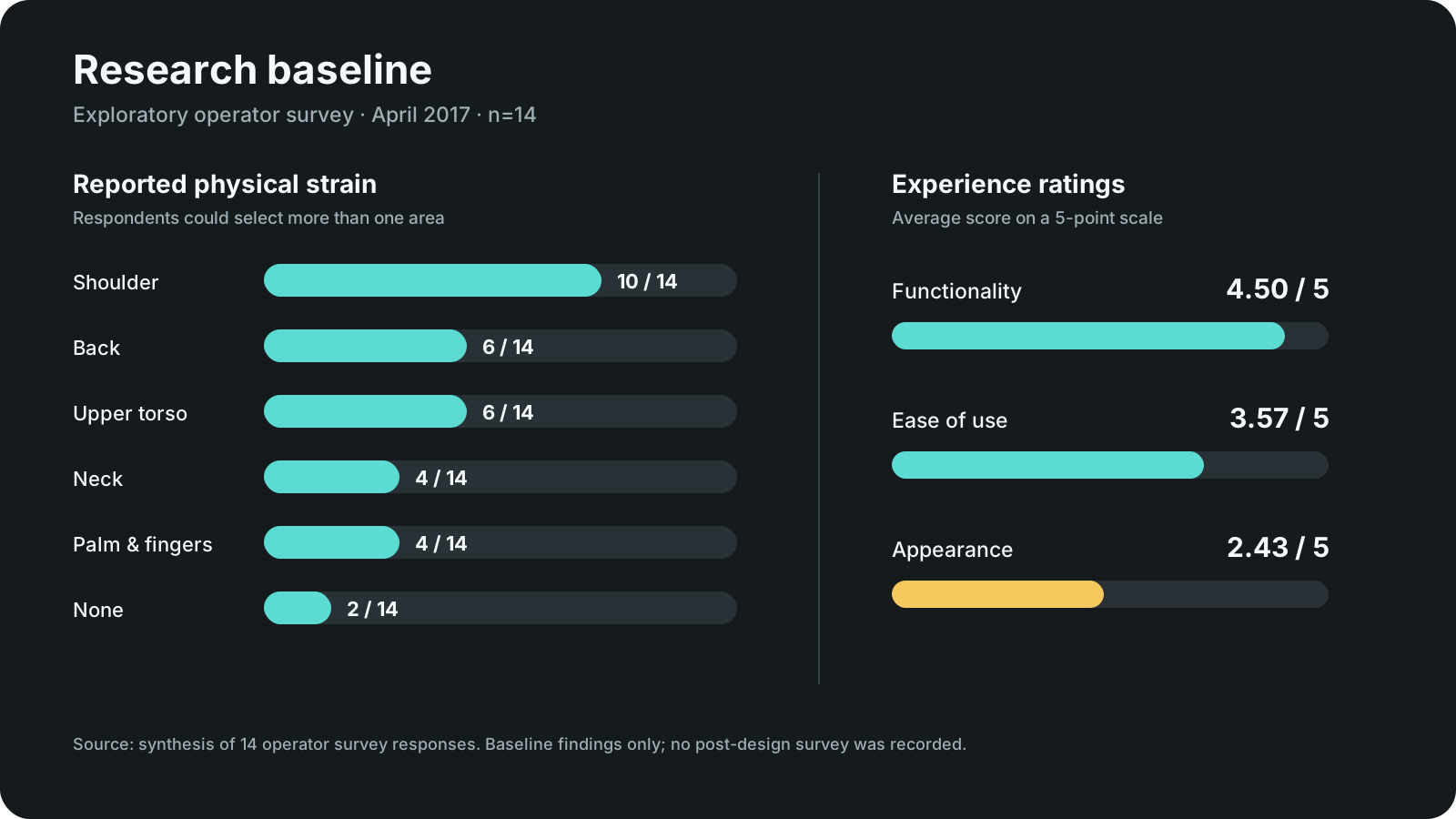
The survey supplied a directional baseline. All 14 respondents rated functionality either 4 or 5 out of 5. Average ease of use was 3.57, while average appearance was 2.43. Twelve respondents selected at least one area of physical strain.
Chip and coolant handling also formed part of the observed operating context.
The overall January-September 2017 timeline is confirmed by the project owner. The surviving schedule documents a more detailed, overlapping core phase:
| Workstream | Recorded dates | Primary output |
|---|---|---|
| Research | 8-22 February | Product, stakeholder, operator, and competitor evidence |
| Problem solving | 15 February-8 March | Opportunity areas and design constraints |
| Concept generation | 25 February-16 March | Alternative enclosure and interaction directions |
| Graphics | 16-24 March | Visual language and presentation development |
| Rendering | 25 March-1 April | Comparative and resolved concept views |
| 3D modelling | 2-9 April | Component-level CAD and engineering resolution |
These workstreams overlapped rather than forming a simple linear sequence. Physical-model photographs dated 25 April show that model-making continued after the final dated CAD phase, while the wider collaboration continued through September.
The 14-response, multi-select survey recorded:
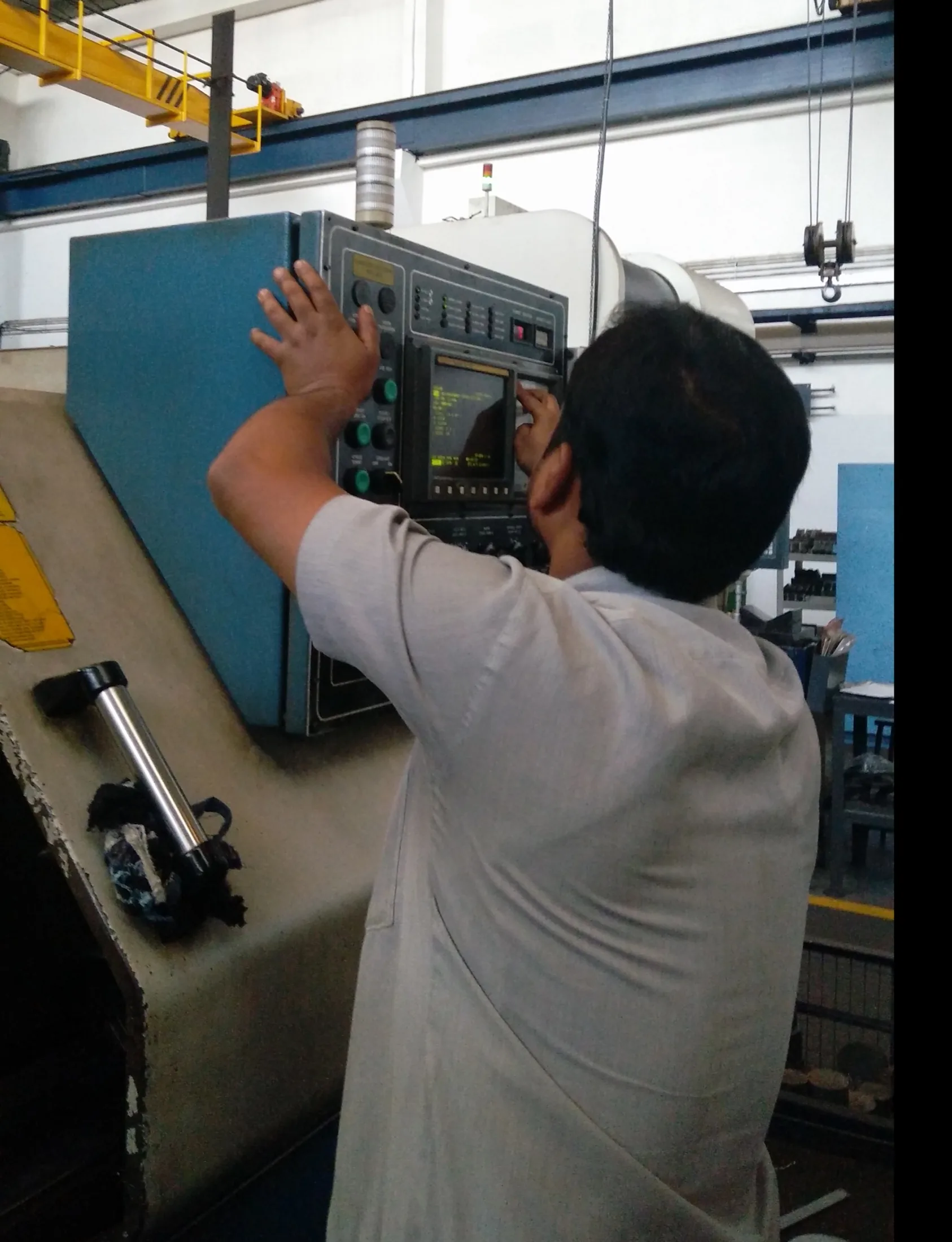
The accompanying ergonomic notes documented operators holding an arm at the console, supporting the hand against its upper edge, and entering commands for approximately three to four continuous minutes. Reaching, pushing, pulling, turning, bending, and lifting were also observed around the machine.
These findings informed several design responses: clearer integration around the controller, a local task light for low-lit conditions, magnetic door closures, a magnetic stopper for storage access, and better accommodation of the operator around the enclosure.
The evidence shows that the ergonomic findings informed the concept. It does not include a post-design assessment proving that the proposal reduced strain.
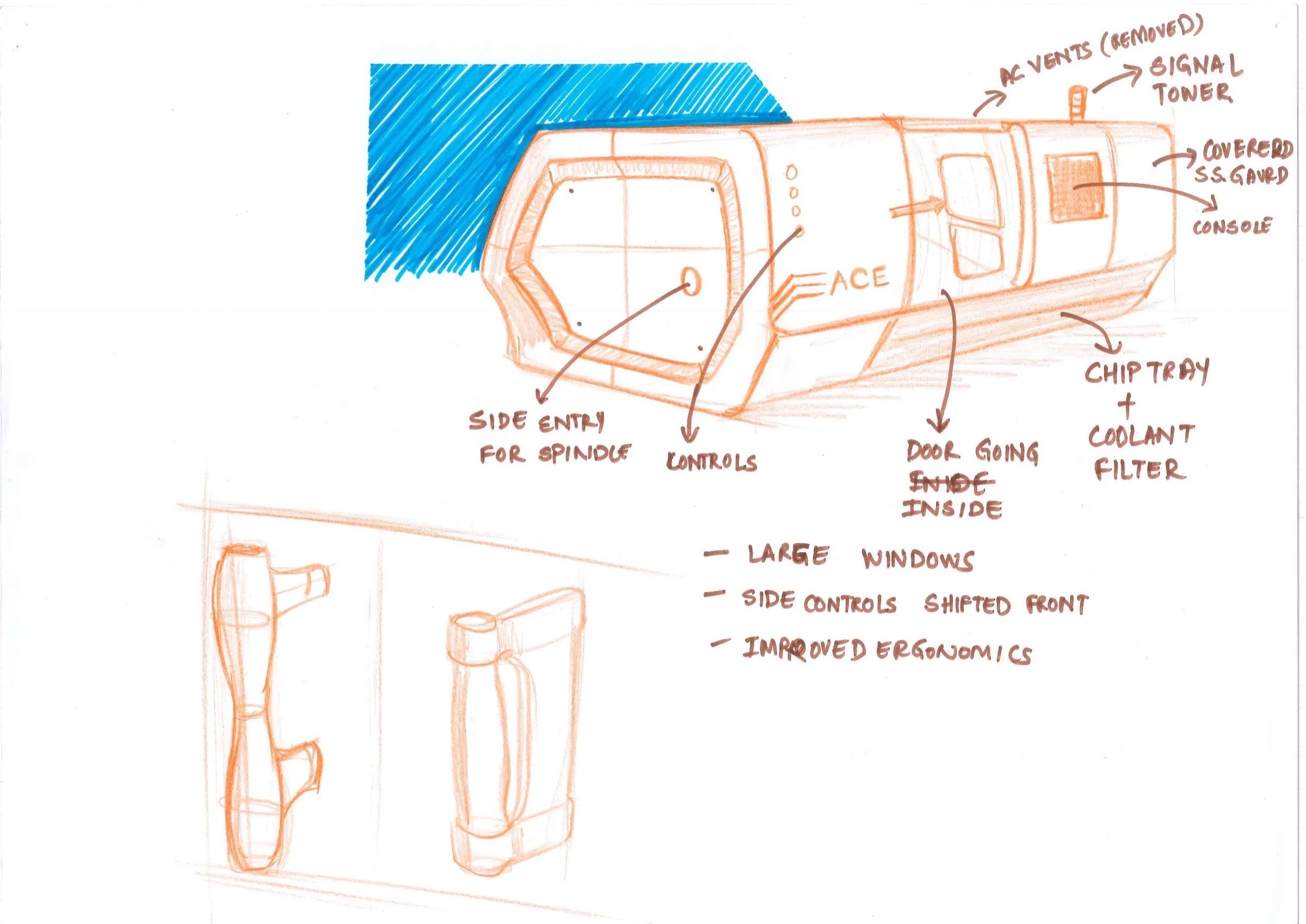
I moved from broad form exploration to annotated sketches that connected façade decisions with the controller, vents, doors, chip tray, coolant filtration, and maintenance access.
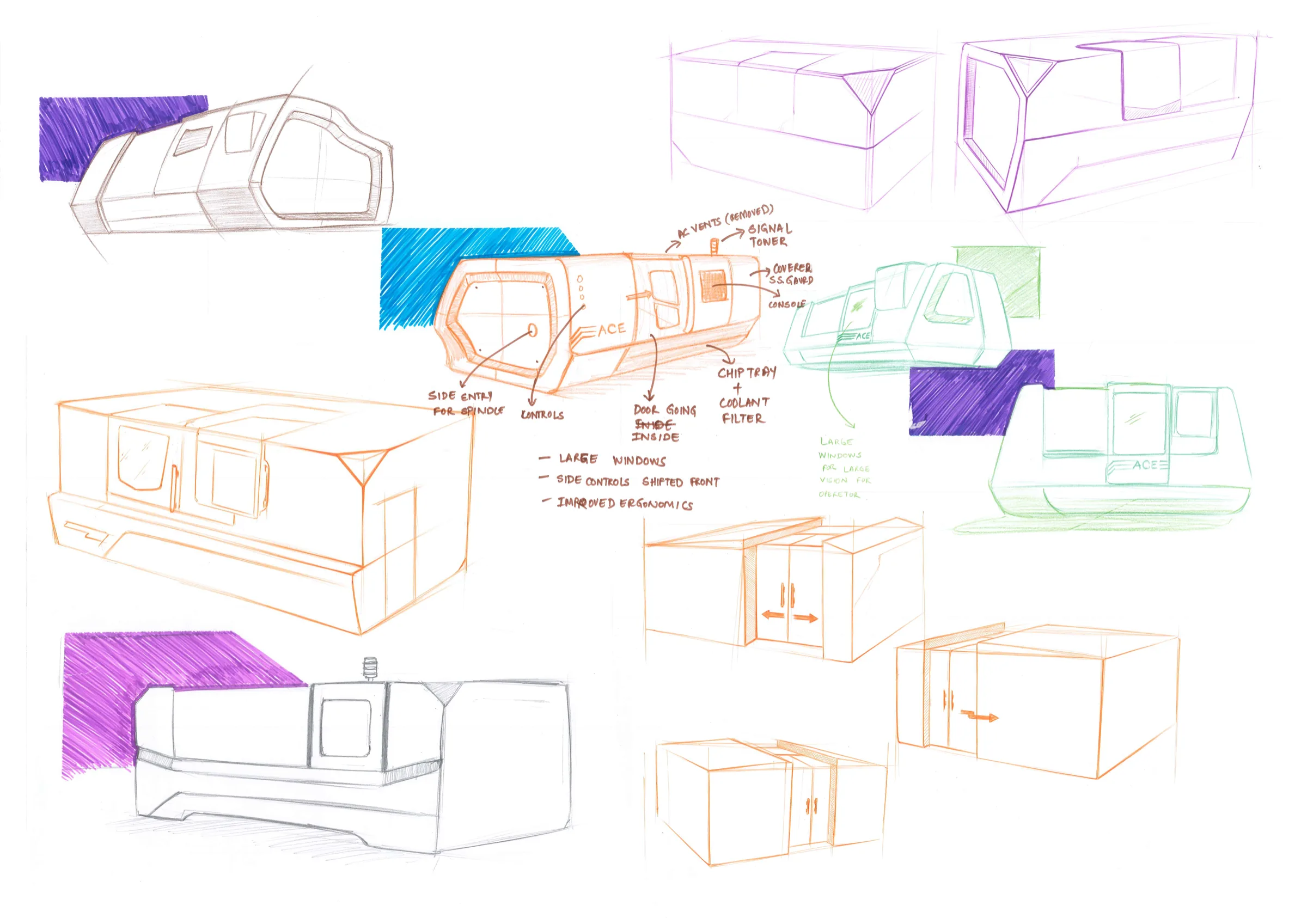
The surviving thesis and presentation use inconsistent concept numbers, so the directions are described here by their defining decisions:
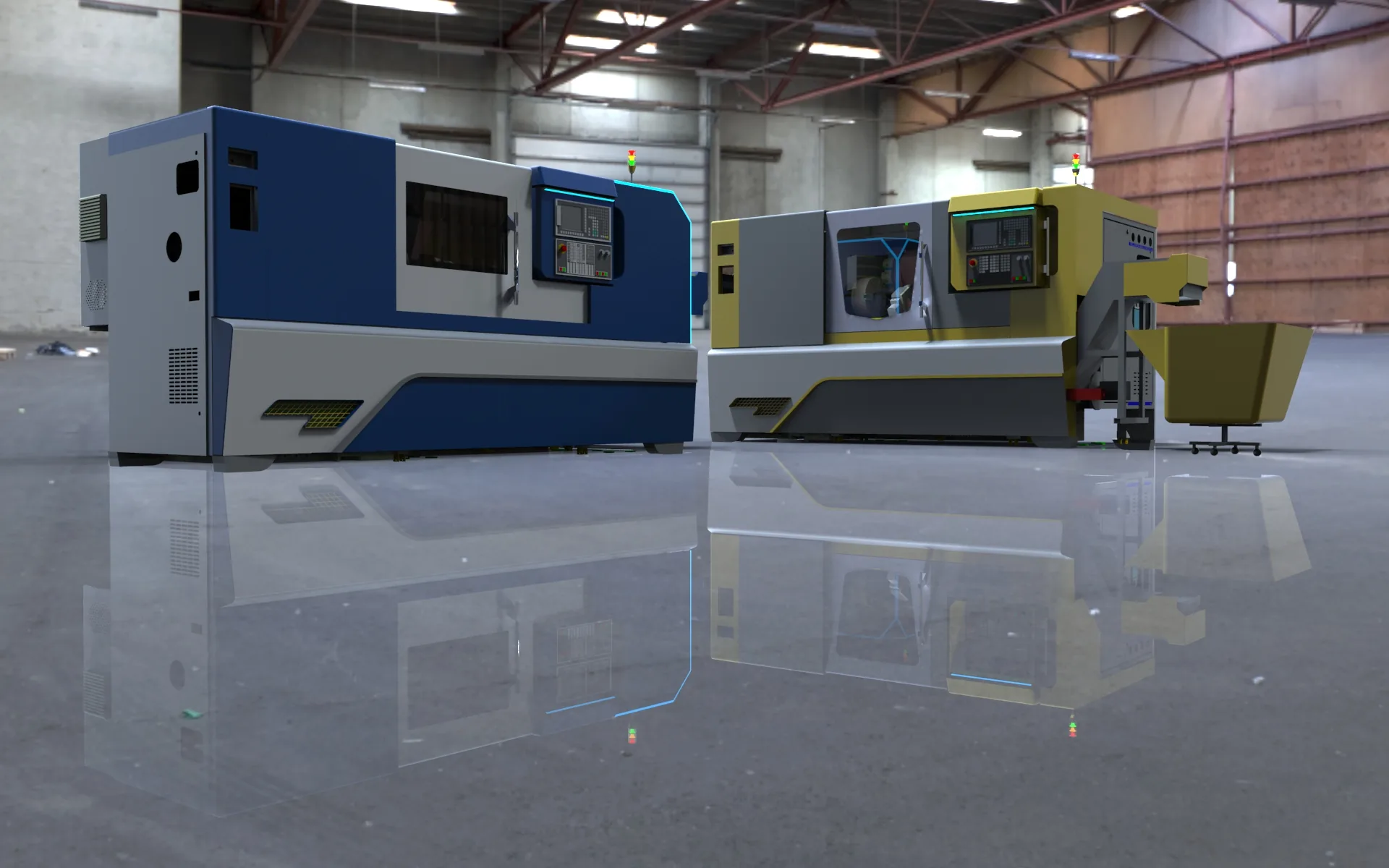
The retained-guard, no-roll-band direction moved forward. The documented rationale combined in-house manufacturability, avoidance of an imported mechanism, compatibility with the existing guard, added storage, and a balance of aesthetics, cost, and implementation feasibility.
The choice was recorded through pros-and-cons comparison and team judgement. No weighted decision matrix, engineering sign-off, manufacturing trial, or formal approval record survives.
The project did not redesign the CNC software interface. It focused on how the physical enclosure supported the existing controller and the work happening around it.
The proposed experience included:
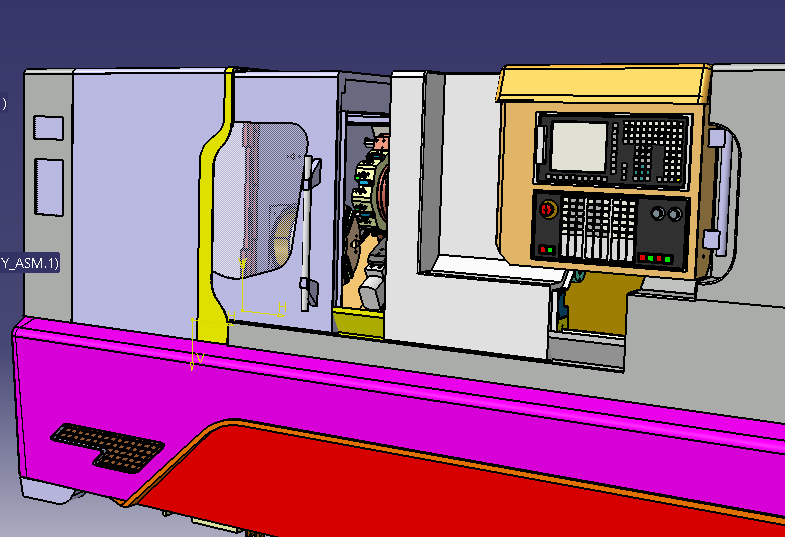
These were design proposals. The archive does not document electrical integration, interlock verification, airflow analysis, or functional testing.
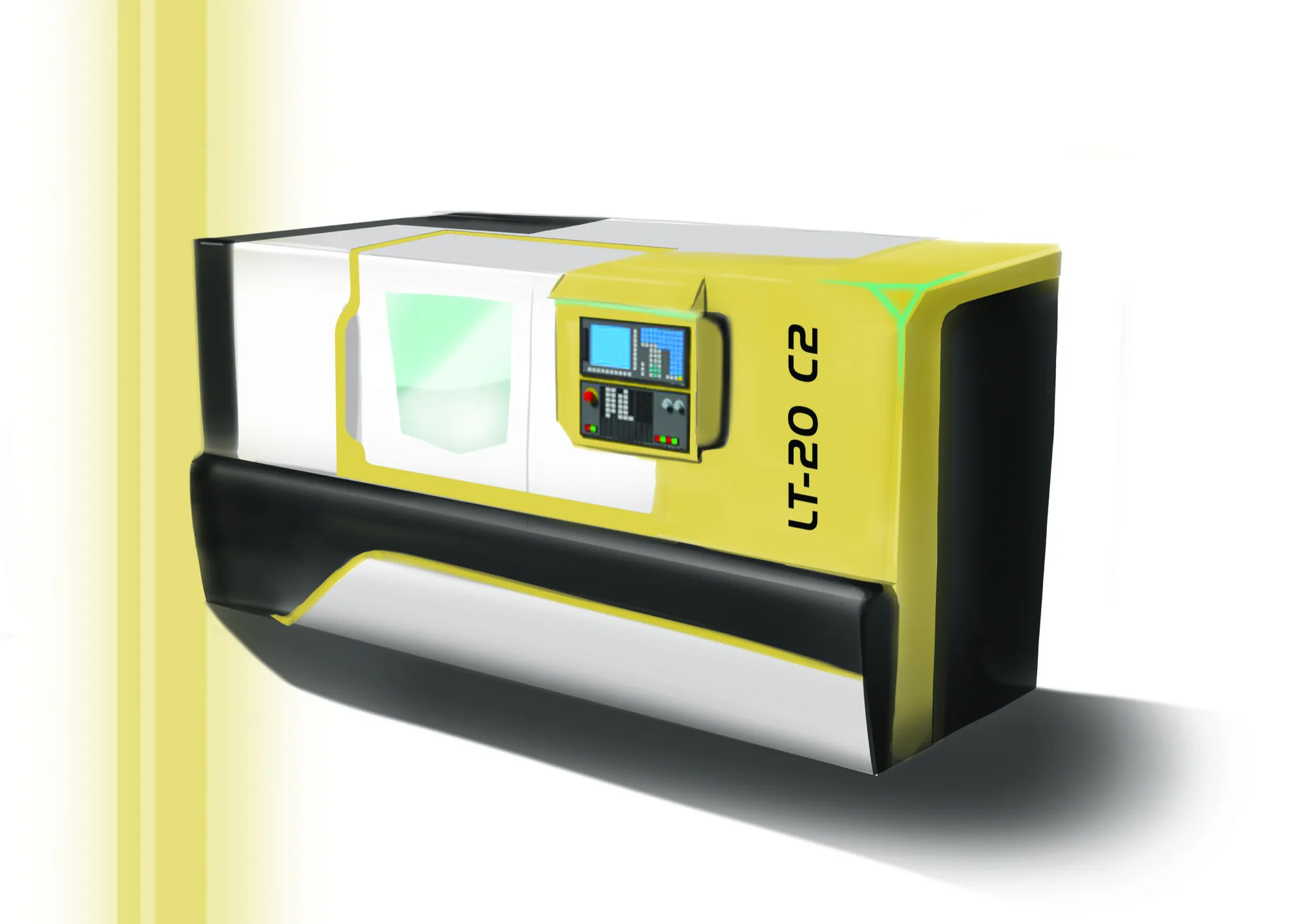
The project progressed from sketches to realistic renders and native component-level CAD. The surviving model contains separate parts for the enclosure, doors, covers, controller surround, conveyor, ventilation, storage, hydraulics, and waste bin.
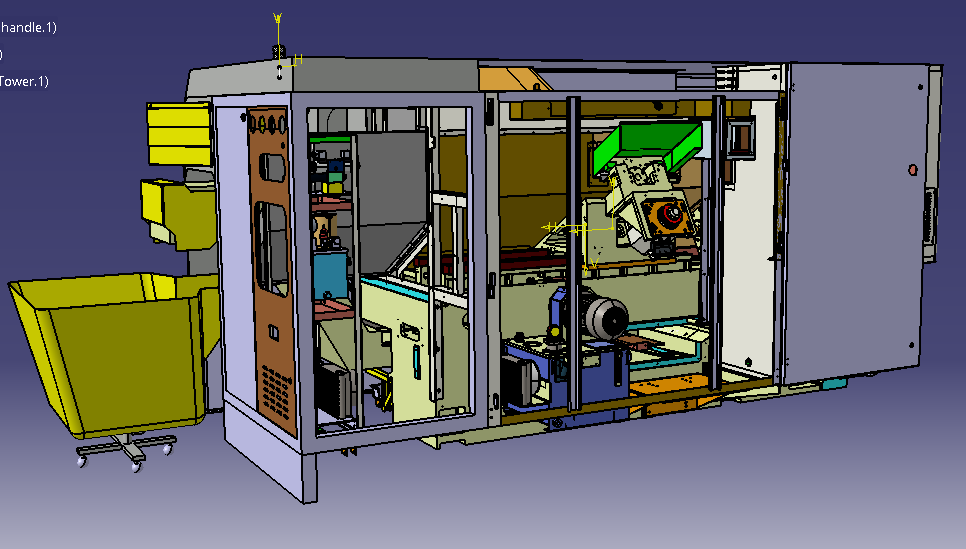
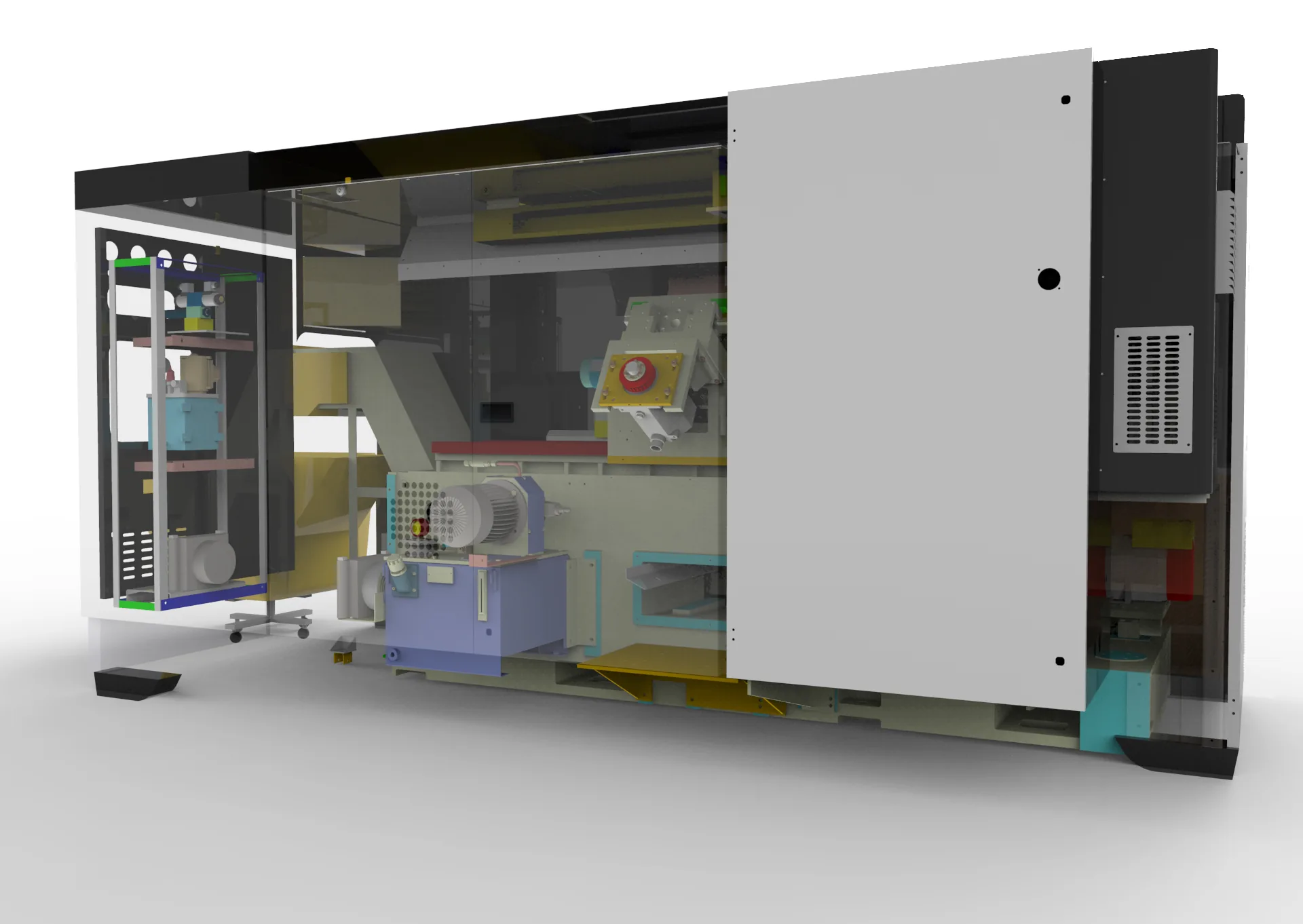
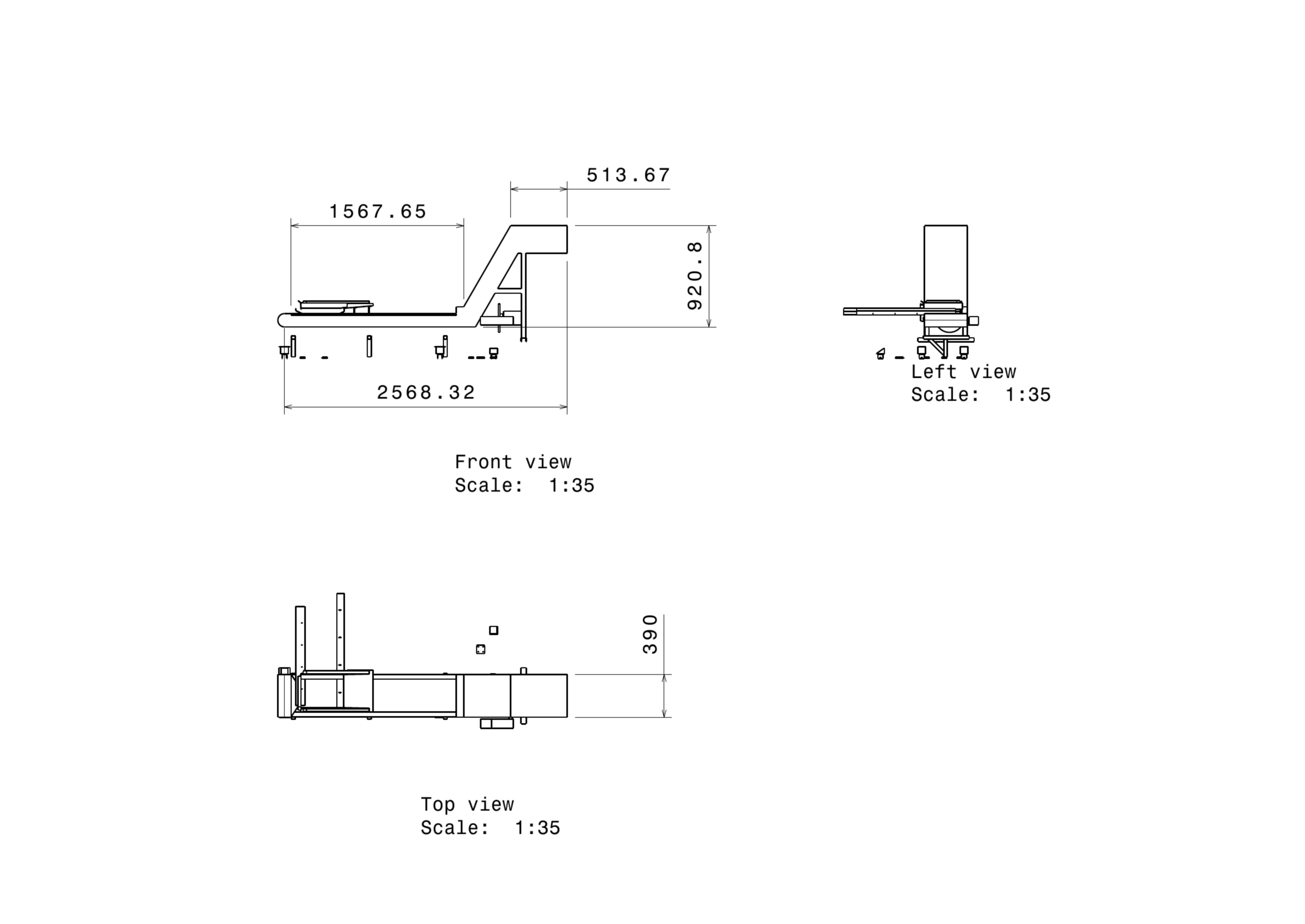
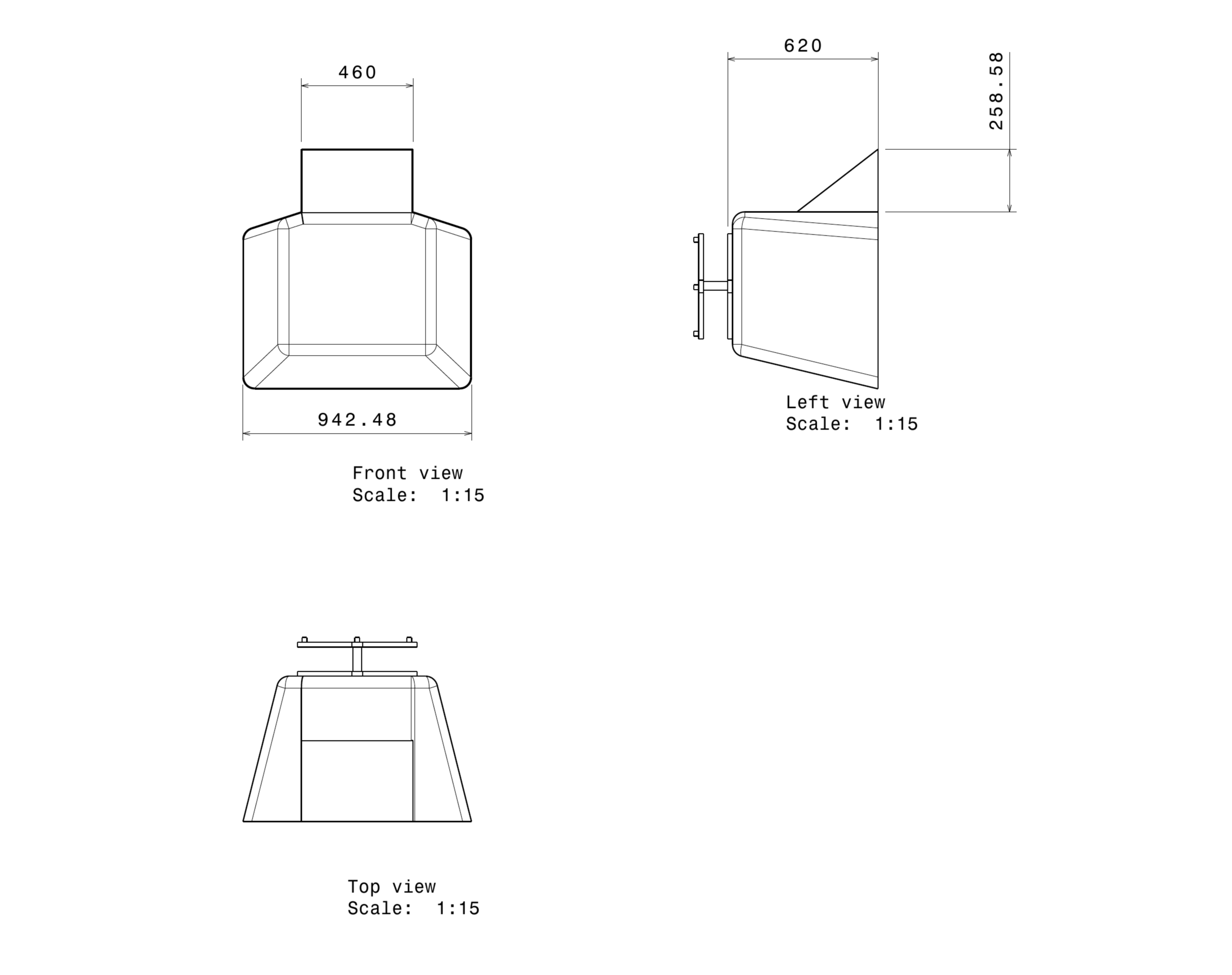
Two supporting drawings translated the conveyor and bin concepts into orthographic views.
A painted physical appearance model made the selected stance, proportions, colour blocking, controller placement, and separate chip-bin element tangible.
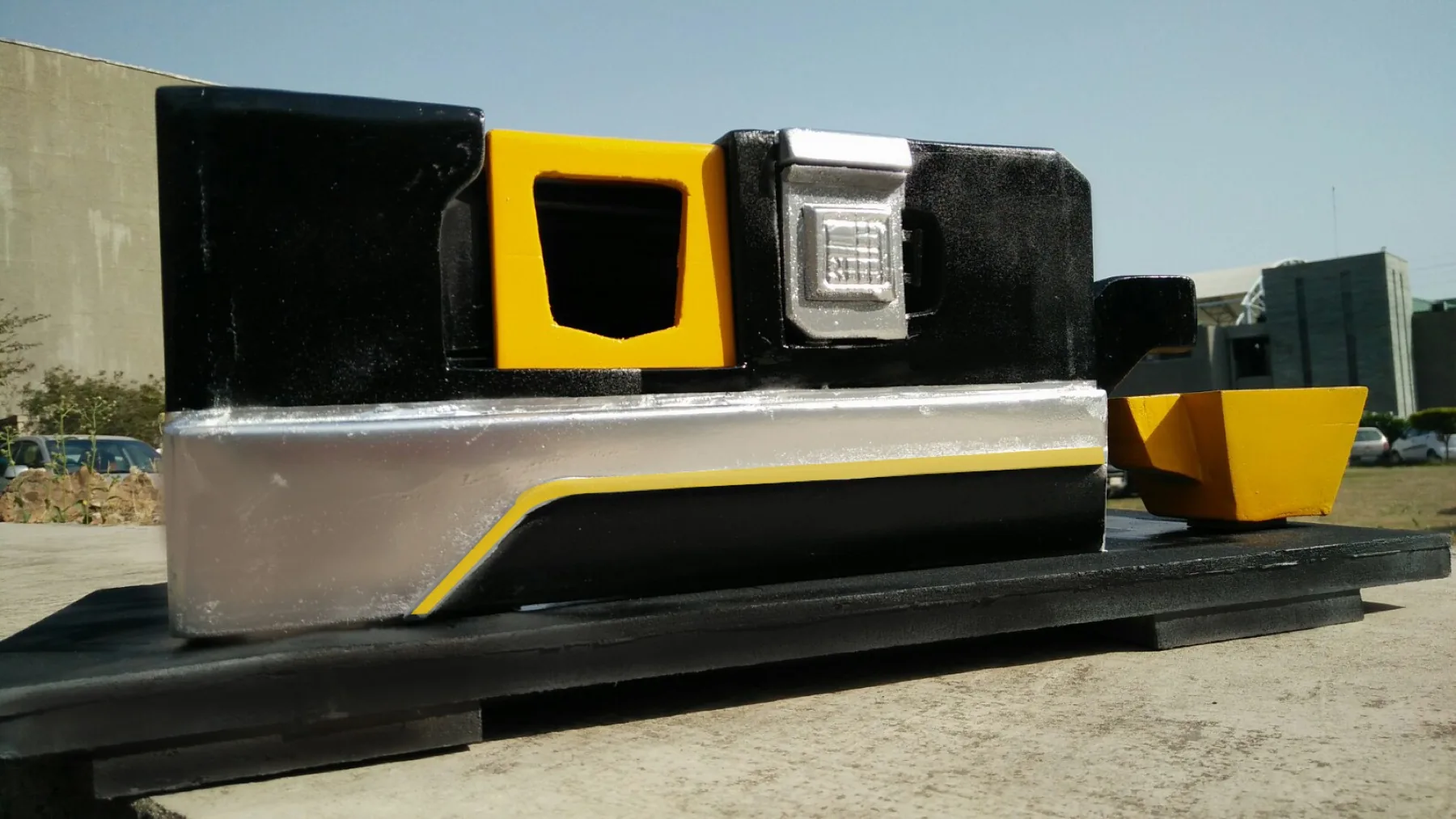
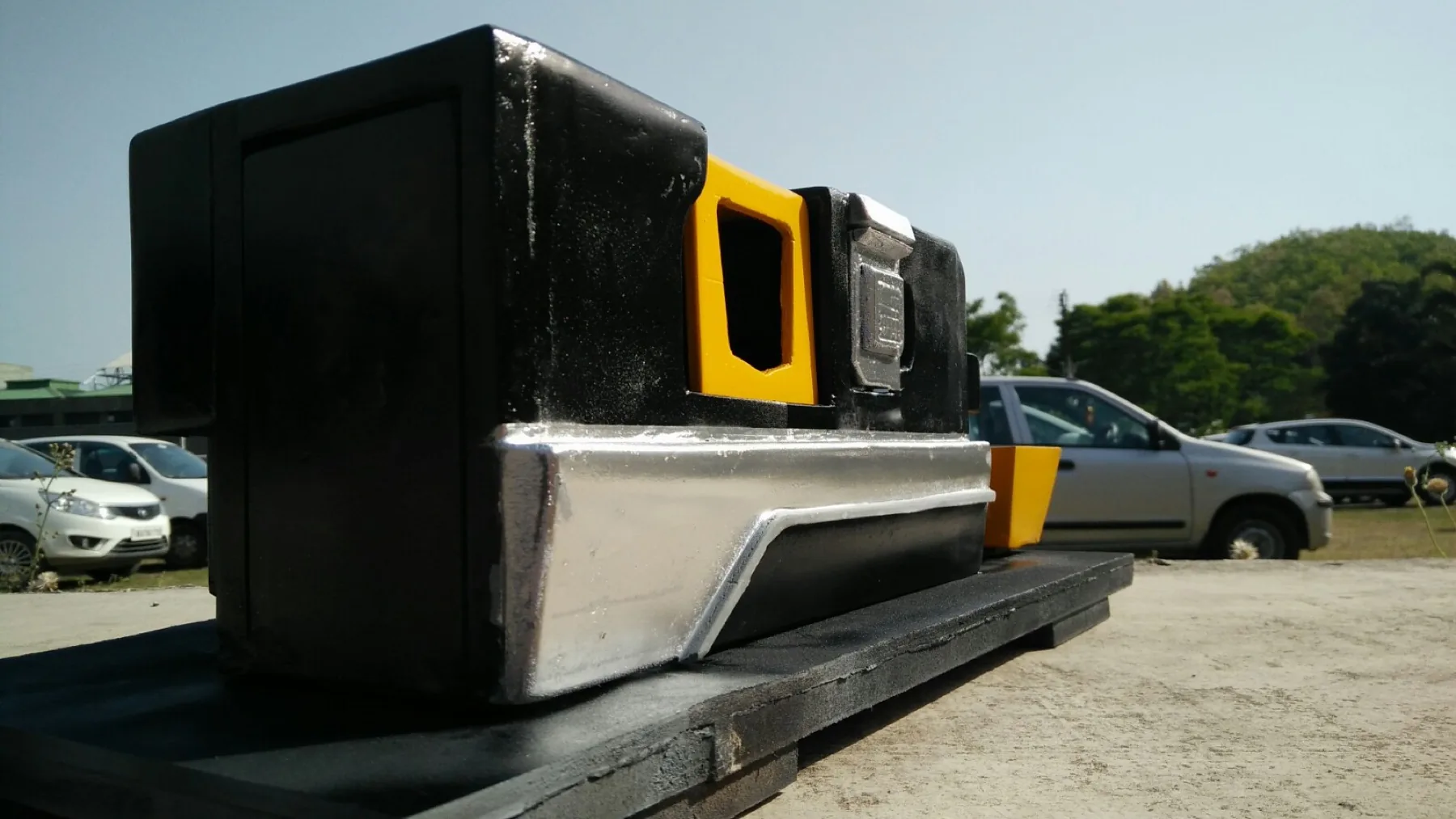
The source material does not state the model's scale, material, fabrication method, dimensional accuracy, or test purpose. It is therefore described as an appearance model, not a functional or engineering prototype.
The research established that the starting problems were relevant to operators and other stakeholders. The survey and observation material provide evidence of the baseline experience, including ergonomic strain and the gap between high functionality ratings and lower appearance ratings.
The supplied archive does not contain:
The concept and appearance model are therefore presented as resolved project outputs, not as proof of improved safety, ergonomics, usability, cost, or sales.
The selected concept brought the main design decisions together:
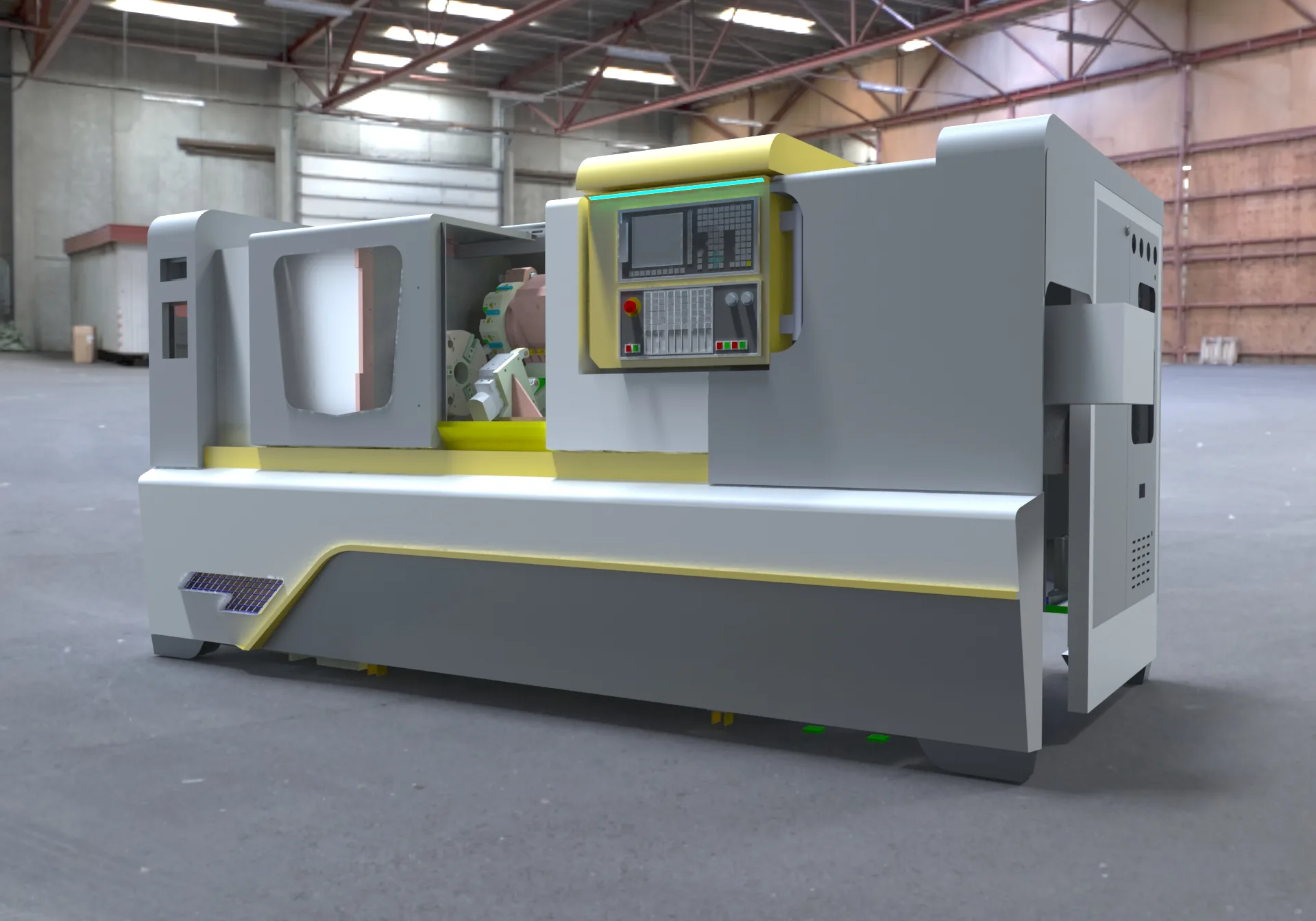
The selected direction aimed to work with Ace's existing component manufacturing, sheet-metal fabrication, painting, and final-assembly capabilities. Retaining the stainless-steel guard avoided the imported roll band, while additional sheet-metal coverage created the unified enclosure.
Brand expression remained a supporting strand rather than the main outcome. Aditya led the future brand narrative and presentation work, while major product decisions remained collaborative.
The visual exploration asked how consistent colour blocking, a recognisable front profile, the controller surround, lighting, and repeated enclosure details might connect a wider Ace machine portfolio. The archive demonstrates that proposal, but it does not establish commercial adoption.
The evidenced outcome was a selected industrial-design direction developed through research, ergonomic analysis, sketches, digital studies, native CAD, renders, engineering drawings, and a physical appearance model.
The most defensible result is the design resolution itself: a coherent proposal that connected operator needs, maintenance access, manufacturing realities, and brand expression without requiring a new core machine architecture.
This project changed how I understood the word appearance. On an industrial machine, form is inseparable from posture, guarding, maintenance access, chip handling, ventilation, manufacture, transport, and the confidence a product communicates before it is switched on.
If I extended the project today, I would build a full-scale ergonomic mock-up, define reach and visibility criteria before concept selection, involve operators and service engineers in structured evaluation, and validate safety, airflow, assembly, cleaning, and maintenance before making any outcome claim.